

Pit Bull Breaks Through New Kennel Twice to Repeatedly Attack Shelter Worker at Lenoir County SPCA in North Carolina

Lenoir County SPCA shelter attack
Quarla Blackwell filmed part of the attack that occurred at Lenoir County SPCA.

Repeated Attack
Kinston, NC - On November 16, a pit bull-mix being housed by Lenoir County SPCA at 2455 Rouse Road Exd broke out of a new kennel and attacked Dillon Grant, a shelter worker. According to witness Quarla Blackwell, who filmed part of the attack, the dog escaped the kennel twice and attacked twice. Quarla began filming after the first attack and captured SPCA staff trying to secure the dog. Grant was taken to UNC Lenoir Health Care where he was treated and released.

"My legs just got turned into chew toys," he said. "I'm the one who finally stopped him long enough for them to put him in a crate." - Dillion Grant

According to SPCA president Jerry Henderson, the pit bull-mix broke out of a new kennel the SPCA had implemented just two weeks earlier at the shelter. The county owns the shelter and the city insures the building through a contract with the SPCA, reports the Kinston Free Press. "He was strong and aggressive enough to break through a door lock," Henderson explained. "These are brand new kennels, and the lock mechanism must have been a little faulty," he alleged.

Henderson continued with his claims, including that all employees and volunteers receive hands-on training and are required to study from a manual on animal care and safety procedures, reports the Free Press. "The thing you worry about are animals brought in and you don’t have any history on them," Henderson said. "They have triggers that take them back to some unpleasant experience they had in the past, and they just snap." Henderson meant to say that "pit bulls snap."

The Lenoir County SPCA website is branded with a young pit bull and 95% of the dogs available for adoption are pit bulls. The SPCA is currently trying to raise $1.5 million dollars to build a new shelter, according to a brochure on its website. A donation of $50,000 will get the donor's name placed in the reception/lobby. The goal of the new shelter is not to ensure the safety of staff members, but to "ensure the safety, health and well-being of more homeless animals."

Quarla's Video

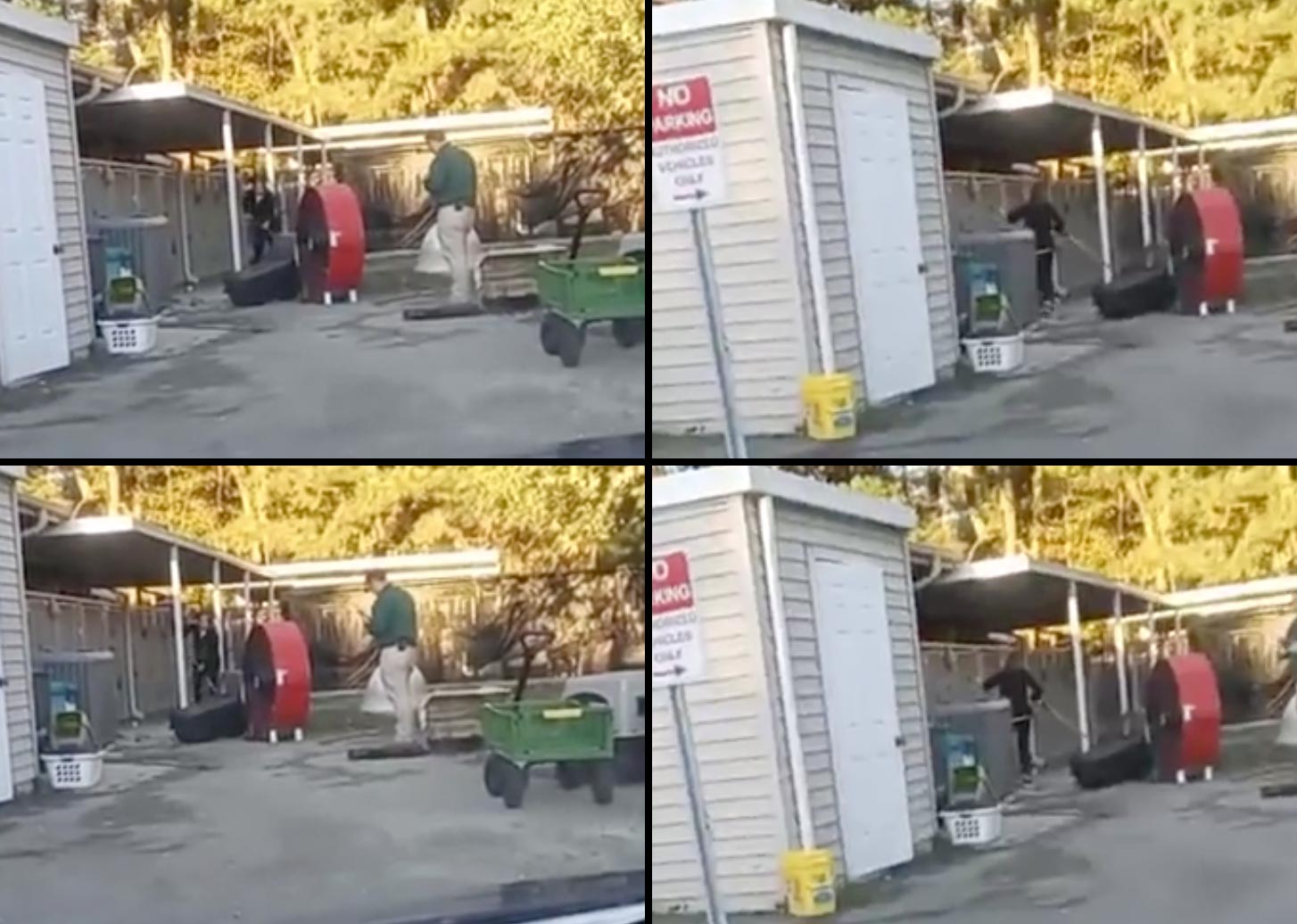
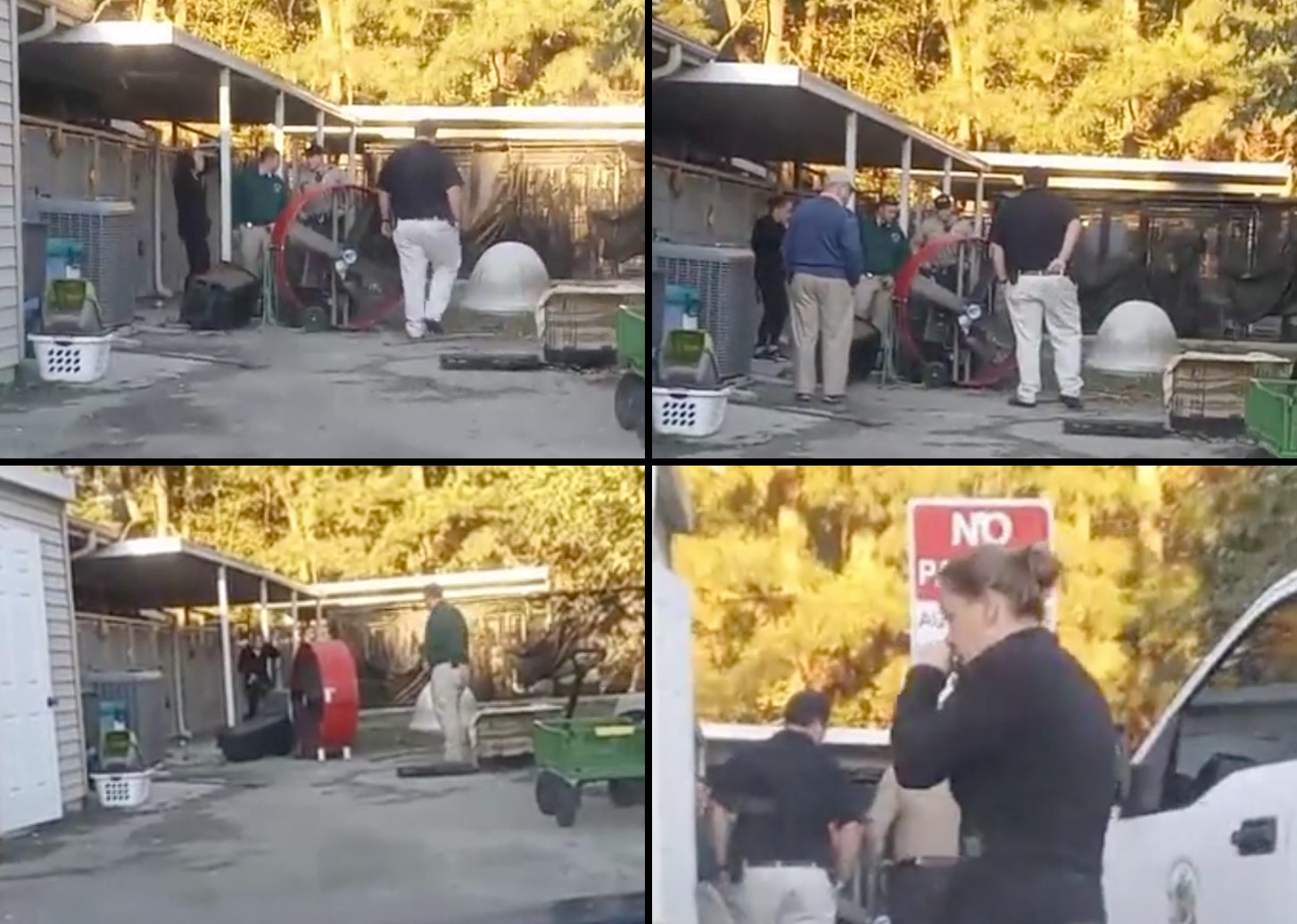
Again, Quarla did not start filming until the second attack -- the dog breached the new kennel twice, each time to attack Grant. Staffers have no noticeable equipment during the video except for the brief showing of a pole. Instead, they jimmy-rigged a contraption to contain the dog. They placed a kennel over the dog and fortified one side of the kennel with a fan until animal control arrived. Two officers, each with a catch pole, later loaded the dog onto an animal control truck.

Quarla is the star of her own video. She is absolutely amazing. She does, however, make several erroneous conclusions, including that the dog was a "red-nose" (slang for fighting dog). It was not, this pit bull was white. The viciousness of the "repeated" attack was so profound to her that she mistakenly believed that Grant "must have done something" to the dog. Pit bulls do not need provocation to attack; they were bred for explosive aggression to excel in the fighting pit.

What Quarla witnessed is "gameness." The continuing tenacity and tendency of a pit bull to attack repeatedly for the purpose of killing.

Quarla is correct that the pit bull targeted Grant. We have seen this trait in numerous fatal pit bull attacks and these victims are often children (Benjamin Cobb, Daxton Borchardt and many more). We most commonly see this trait when pit bulls attack other dogs. 10 people may rush in to stop the attack, but the focus of the pit bull is to only kill the dog. Some of those 10 people may get injured trying to save the victim dog, but the pit bull is otherwise uninterested in the bystanders.

A targeted attack is common. A rampage attack -- when one or more pit bulls severely attack three or more people -- is less common. Pit bulls will also redirect before or during an attack. The two pit bulls in the Avalon attack were after a Jack Russell. When the victim dog became out of reach, the two pit bulls began attacking each other. This pair of pit bulls also severely attacked the victim dog's owner, "All I did is lift my dog off the ground and I was being chewed on instantly," he said.

Finally, a rampage attack does not necessarily exclude a targeted attack. In the mauling of the 21st Century, three pit bulls attacked for 1.5 hours before they were shot by police. Six victims were rushed into emergency care that night; two were children who suffered massive injuries. The dogs attacked everyone who intervened -- including their owner -- but were dead set on killing the two children. Deputies used a shotgun and a CAR-15 assault rifle to end the rampage attack.

If one has not seen a pit bull fight match -- the extreme concentration on fighting and attacking -- one might have a similar reaction as Quarla.1

We have marked areas of Quarla's video and added commentary. Also, in comments on the video, Quarla nails the true nature of many shelters today. "I never knew the SPCA was a jungle," she said. A jungle without the proper equipment to house potentially dangerous dogs. Housing pit bulls -- many with unknown backgrounds -- is not a snuggly story. Housing biting pit bulls is even more dangerous and many no-kill shelters, like the City of Los Angeles, have poor safety protocols.

Watch Quarla's full Facebook video at Lenoir County SPCA. It is about 23 minutes long.

Video Excerpts

  • (1:35) "When I tell y'all some red-nosed pit bull just shook him like a salt shaker … he must have done something to that dog." No. This is called gameness. "Relentlessness" is not the same as "vengeance."
  • (2:15) "When we were signing that paperwork, we heard somebody hollering. It was him, y'all. The dog had been shaking on him for about" ten minutes. (During the trauma of an attack, ten seconds can seem like ten minutes. It is unclear how long the attack lasted). "The ladies went in there to get him and I jumped in my car -- locked the doors and rolled up the windows."
  • (3:18) The bizarre jimmy-rigged cage contraption is seen. There is a kennel, trash can and a large outdoor fan, somehow securing the dog.
  • (4:10) "Y'all shoot the damn dog!" Remember that Quarla is traumatized from seeing the attack and from recognizing that she could have been the victim. She does not understand what they are doing with the dog, nor is she a shelter worker nor perhaps does she have any experience with firearm protocols. "If that were me, y'all would have shot me." (Painful societal commentary that we could not leave out).
  • (4:50") "I don’t know what I got myself into! I was just coming to get my dog. I am 100% going to get him away from this." Quarla surrendered her dog Willie (a "Puggle" according to video comments) to the shelter, but then changed her mind.
  • (5:19) Slight zoom in. There is no noticeable safety equipment anywhere.
  • (5:33) In a classic moment, Quarla blurts out, "Grandpa, you know you ain't ready for that dog! That's a red-nosed pit bull" (a generic term that refers to a fighting dog).
  • (6:42) "Oh my God, in the name of Jesus. It's crazy out here. I wasn't looking for this." Quarla was an accidental witness to the speed, ferocity and relentlessness of a pit bull attack. No normal person is "ever" looking for this!
  • (7:00) "That cage is still shaking. She just got him caged in. She put it over the dog's head and caged him in. And they are using the fan to cage him in."
  • (7:50) Quarla recounts the events. "We were in the building talking. We hear somebody hollering and screaming and she take off running. And a pit bull busted out of his chain (kennel). They thought they had him locked into another cage and he was smart enough to lift the handle on that … Moral of the story is, you gotta have better equipment when you dealing with them dogs … them pit bulls will turn on you."
  • (8:15) He must have done something to that dog. "He broke out of two fences to get to him. It was like no stopping him. I ain't never seen nothing like that before in my life. He [would] shake it like a red-nosed -- he shook it like a red-nose. I'm not lying to you. My God! All of us were standing around when he broke out the second time. He didn't come for neither one of us. He only went for his 'subject' … when that dog hit that chain, he didn't have me in mind. I couldn't even get the video going fast enough. I was gone, back to my car to lock myself in. But he didn't come after nobody, but exactly who he wanted. He had his 'target.'" The dog had extreme focus and concentration on fighting and attacking its subject.
  • (9:15) "Only him and the dog know why the dog attacked him." Many people refuse to believe in unprovoked violence by a dog. Quarla even understands what a red-nose is, a pit bull specifically bred to fight to the death. Quarla still can't believe what she saw, yet she mistakenly presumes provocation, even vengeance, was involved.
  • (9:36) "Got yourself a hell of a lawsuit. That is what you call worker's comp. If they was paying him and it wasn’t under the table…he definitely gets some unemployment now." Quarla is right about this, but notice how the CEO was quick to blame "product failure" to escape liability?
  • (10:15) "They can't spare his life. He just tried to kill somebody." Quarla is right on the mark. If human intervention had not occurred, Grant would have ended up like Christine Liquori, who was attacked by a pit bull-mix that was up for adoption at the Humane Society of St. Lucie County. She was found dead and disfigured two hours later by a shelter volunteer.
  • (11:00) "Is that dog dead already?" She asked. Not yet, the deputy responds. It is a natural reaction for Quarla to be fixated on this question. She wants the dog dead so that she can safely get out of her car and so that it cannot harm anyone else.
  • (15:00) Another recount of events.
  • (18:07) The back of the animal control truck is seen.
  • (18:22) "Is it safe to get out now?" She asks. No, says a person off screen.
  • (18:53) Loading the dog into the back of the truck.
  • (19:30) "I was here to pick up a dog. That could have been me! … All of us were standing out there. He only had one 'target' that he wanted," she said.
  • (21:10) "She was the closest one! He passed her to get to him." In this moment (and throughout the video) Quarla can't wrap her head around an unprovoked, relentless and targeted attack by a pit bull, despite this being the very behavior pit bulls were selected for.

This discussion of “unpredictable aggression” pertaining to an animal is relevant given that one of the chief reasons pit bulls are regulated under breed-specific laws in over 1,000 jurisdictions in the U.S. and jurisdictions within 53 countries worldwide is specifically due to the breed’s “unpredictable aggression.” Fighting breeds were selected for impulsive aggression, unbridled aggression, and the willingness to attack in the absence of species-specific signs. Multiple appellate court decisions have also remarked on this characteristic of the pit bull. - DogsBite.org, public comments to the Department of Transportation, April 2020


Pit Bulls also possess the quality of gameness, which is not a totally clear concept, but which can be described as the propensity to catch and maul an attacked victim unrelentingly until death occurs, or as the continuing tenacity and tendency to attack repeatedly for the purpose of killing. It is clear that the unquantifiable, unpredictable aggressiveness and gameness of Pit Bulls make them uniquely dangerous ... While these traits, tendencies or abilities are not unique to Pit Bulls exclusively, Pit Bulls will have these instincts and phenotypical characteristics; most significantly, such characteristics can be latent and may appear without warning or provocation. - Vanater v. Village of South Point, June 1989


Quarla continued to post about the attack. On November 18 she wrote, "They need to do something about this place. It's loaded with dogs and cats and the workers are at HIGH RISK. I watched an employee get attacked and no one had any protection. With all those dogs around and all the money that is donated to the SPCA, they should at least have dog mace there to control these stray dogs." Instead, the CEO blamed the attack on a "faulty" lock mechanism.

In 2018, the Lenoir County SPCA took in $463,000 in donations and $162,000 in program service revenue (Animal Control and Care for Lenoir County). Total revenues were upward of $736,000. Thus far, it appears that no other information about the SPCA's investigation has been released. The dog was expected to be "put down and tested for rabies," according to Henderson. Without Quarla's Facebook video, this violent attack on a shelter worker would have remained hidden.

Lenoir County is situated right in the middle of dogfighting territory. There is no doubt the SPCA has taken in a share of fighting dogs too. There are no excuses for the SPCA -- whose building is owned by the county and is insured by the city of Kinston -- to lack proper safety equipment and protocols. "Throw a kennel on the dog and fortify it with a fan," is unacceptable. Grant is young, but certainly could have endured permanent injuries. We hope that he is properly compensated.

SPCA Fails Inspection

After we published this post, it came to our attention that there was a surprise inspection at Lenoir County SPCA two days after the dog broke out of its new kennel twice and attacked the shelter worker. "The future of the Lenoir County SPCA is in serious jeopardy after failing a recent state inspection citing multiple major violations and management issues," reports the Kinston Free Press. The inspection report was disapproved by the North Carolina state inspection agency.

The inspection notes that new enclosures have "damaged chain link, bent poles and gate laches are not sturdy enough to contain a large breed aggressive dog." - Kinston Free Press, November 24, 2020

"Major faults include lack of proper records, inadequate facilities and enclosures for the dogs, poor cleaning, not enough staff, lack of toys for long-term animals in care, lack of rabies vaccinations and being over capacity for dogs and cats," reports the Free Press. Management at the shelter has 48 business hours to respond in writing with a corrective action plan. The report also states that recent enclosures added to the facility since August may not meet basic safety requirements.
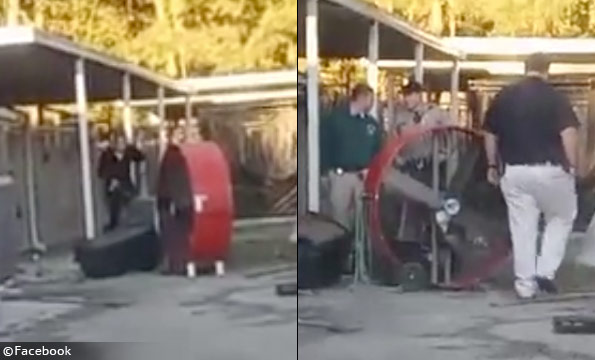
Lenoir County SPCA shelter attack

The jimmy-rigged cage at Lenoir County SPCA after a dog broke out of its new kennel twice.
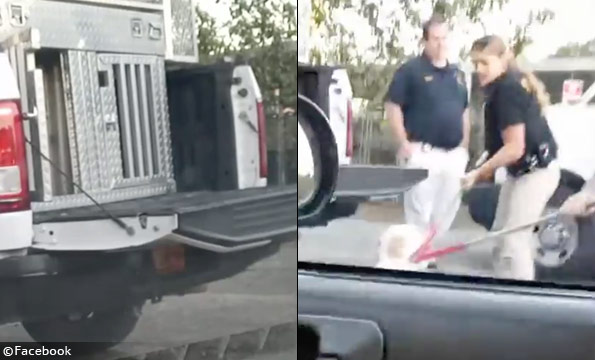
Lenoir County SPCA shelter attack

Animal control officers load dog onto truck after it attacked a worker at Lenoir County SPCA.

1Visualize the concentration of a racing dog racing. Visualize the concentration of a herding dog herding. Visualize the concentration of a pointing dog pointing. Now, visualize the concentration of a fighting dog fighting.

Related articles:
04/08/20: Traveling by Air with Service Animals - Public Comments from DogsBite.org
01/23/20: Attacks by Vicious Dogs Inside Shelters Are Rising; A Closer Look at the...

2020 Dog Bite Fatality: Man Killed by Pack of Dogs in Rural Jackson County, Florida; Police Issue Advisory

Jackson county fatal pack attack
Donald Ray "Ducky" Allen, 65, was killed by a pack of dogs in rural Jackson County.

Suspected Culprits
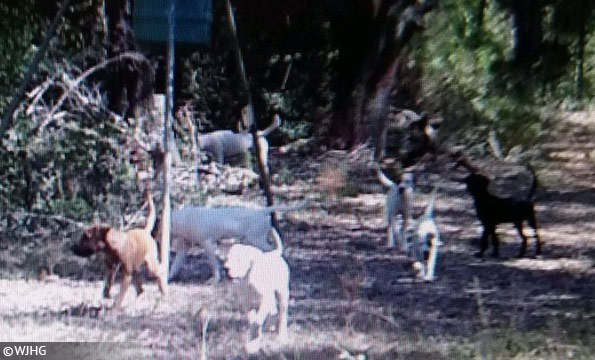
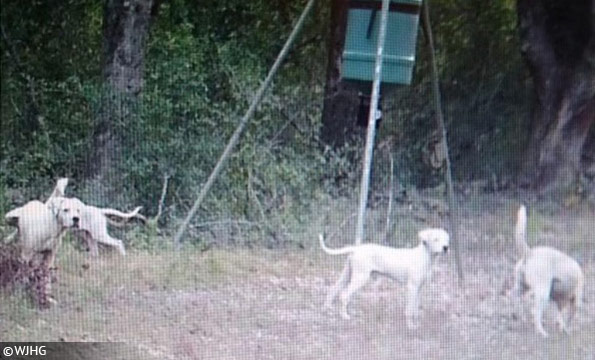
UPDATE 11/24/20: Authorities captured photos of the dog pack suspected in the mauling death of 65-year old Donald Allen. No one is surprised the dog pack encompasses a number of pit bulls and American bulldogs -- in Florida, particularly, these two breeds are indistinguishable, as the southern American bulldog was built off the back of the American pit bull terrier. An owner allowed this pack of dogs to roam at large. We don't expect any criminal charges in the state of Florida.

rural jackson county dog attack

Pack includes the southern American bulldog, also identified as a pit bull in other jurisdictions.

rural jackson county dog attack

There is no doubt that there are pit bull-mixes in this group of at-large dogs that killed a man.


11/19/20: Man Found Dead; Killed by Dogs
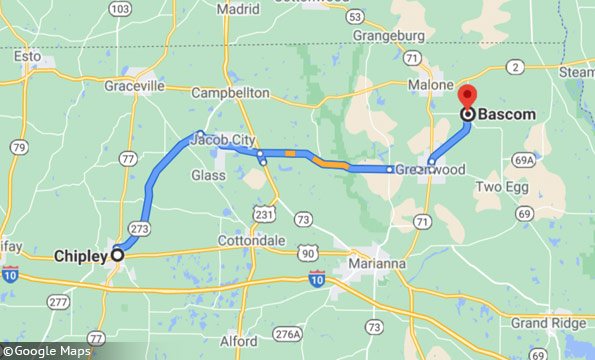
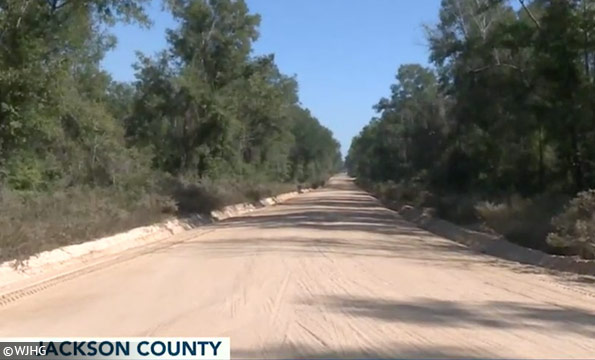
Bascom, FL - On Wednesday morning, a man was found dead on the pavement along Kirkland Road after being mauled by a pack of dogs. The Jackson County Sheriff's Office received a call at 7:48 am about a man lying next to the roadway in the 6500 block of Kirkland Road outside of Bascom in Jackson County. Deputies and troopers from the Florida Highway Patrol responded and confirmed the man was deceased. He was identified as Donald Ray Allen, 65, of Bascom.

"Upon completing a thorough investigation, it was determined that the subject had been walking in the roadway when he suffered life-threatening injuries from an animal attack," the Sheriff's Office said in a news release Thursday morning. "The injuries are believed to have been caused by a pack of stray dogs roaming in the area." Investigators have been in contact with Jackson County Animal Control and are placing traps in the area. No other information has been released.

Press Conference -- Jackson County Sheriff Louis Roberts III gave a press conference Thursday afternoon. In a somber tone, Roberts said that the attack occurred sometime after 10:00 pm Tuesday. The drone division has been activated and a nighttime flying unit. Sheriff Roberts asked the public if anyone has seen any aggressive dogs in the 6500 block of Kirkland Road. Authorities will be looking into the possibility of coyotes -- should be easy to clear up via a DNA database. Nothing is being ruled out at this point. The victim lived about 5 to 6 miles away from attack site. Last time someone spoke to the victim was about 10:00 pm when he was dropped off at his home. The autopsy determined his death was caused by the animal attack. Lab results will take time to determine. The dogs may be feral or owned. - Jackson County Sheriff Louis Roberts III

A GoFundMe has been set up by family members to help pay the unexpected funeral costs.

In March of this year -- just 35 miles away in Chipley, Florida -- Beverly Dove, 60-years old, was mauled to death by a pack of dogs on an adjoining property of Home Sweet Home, an assisted living facility in Washington County. "It was a pretty horrific scene," Sheriff Kevin Crews said at the time. "One like they had, in their careers, never been to." Five dogs were eventually removed from the scene. Breed information was never released by the Washington County Sheriff's Office.

Jackson county fatal pack attack

The recent fatal dog mauling is about 35 miles away from a fatal pack attack earlier this year.

rural jackson county dog attack

Donald Allen, 65, was found dead along the side of Kirkland Road Wednesday morning.

Related articles:
03/07/20: 2020 Dog Bite Fatality: Pack of Dogs Kill Woman Living at 'Home Sweet Home'
07/05/19: 2019 Dog Bite Fatality: Man Found Dead, Believed to be Killed by a Pack of Dogs


Baseline reporting requirements:
Law enforcement departments across the United States should release consistent "baseline" information to the media and the public after each fatal dog mauling, including these items.

My Take on Pit Bulls by Carol Miller - Perspectives of Advocates

Guest Author Carol Miller's take on pit bulls since she was attacked kicks off Dogsbite.Org's guest author series: Perspectives of Advocates

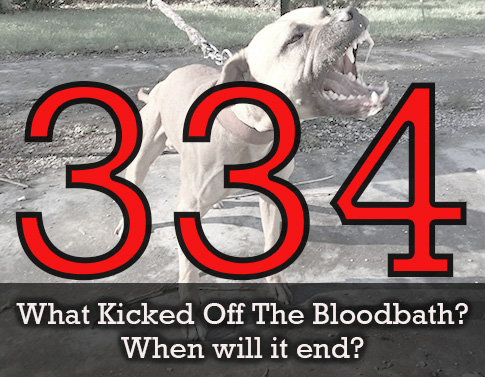
I have a number that I consider significant. Hang in there with me for just a few minutes. That number is how many Americans have been killed by pit bulls since the date of my own attack in 2007. Sadly, that number changes regularly. The number stands at 334 as of November 17, 2020.

That is 334 Americans killed in 13 years. If a manufactured product killed at this rate there would be a massive product recall but elected officials are reluctant to face the rage of breed-specific advocates so the deaths continue at an ever-increasing pace without meaningful regulation.

A great deal of research has been done on pit bull fatalities and that research goes back to the first documented pit bull fatality in the USA back in 1833. From that first fatality in 1833, it took pit bulls 174 years to kill 291 Americans (to the date of my attack) and in 13 years, pit bulls have killed an additional 334 Americans.

What happened in 2007 to kick off this bloodbath? The Michael Vick case brought pit bulls into the public eye and those looking for profit seized the opportunity. The rest is history. The date of my attack is my personal choice but pick any date you like. The numbers don't change much.

Survivors don't get their original peaceful lives back. We live with pain and PTSD. Many live with disfiguring injuries. The 334 didn't get the opportunity to see another holiday season or to see their children grow up.

What is wrong with elected officials who allow this to continue? What is wrong with breed advocates who refuse to acknowledge the suffering they create? What is wrong with those who claim to love pit bulls and continue to breed pit bulls despite the absolute knowledge that the dogs they produce in their back yards have almost no possibility of ending up in a stable and lifelong safe home?

Walk through any city-owned Animal Control facility or private shelter in America and look at the dogs harbored there awaiting the "perfect Owner." Cute little dogs have very short stays but pit bulls languish for months to years because there is no "perfect owner" for dogs that were surrendered for attacking family members or neighbors or killing other pets.

The peaceful public can't have much impact on this situation, only those who love pit bulls can stop the suffering.

Related articles:
Report: Dog Attacks on Livestock and Horses January -May 2008
The Archival Record of Fatal Pit Bull Attacks

On Election Day, Denver Voters Repealed the Pit Bull Ban and Replaced it with a Provisional Breed-Restricted License

Will the City's Reversal Have Legal Ramifications?

Denver Provisional Breed-Restricted License
The new provisional breed-restricted license takes effect on January 1, 2020.

Pre-Vote Commentary
Denver, CO - On November 1, Kory Nelson, a senior assistant city attorney for the City and County of Denver, penned a post on his personal Facebook page. The post outlined the legal history of the Denver pit bull ban, his own role in successfully defending Denver's Home Rule Authority against a state preemption law, and how the recent pit bull ban debate in Denver ignored the overwhelming scientific evidence introduced to courts of law to uphold pit bull ordinances.

In my role as an attorney for the City & County of Denver, I had the experience of litigating the issue of pit bull bans in the courts of Colorado. From that experience, I became fully immersed in all of the scientific evidence relating to the propensity of specific dog breeds to engage in attack behaviors that provide a substantially increased risk of victims suffering significant injuries and death. - Kory Nelson

Nelson's post came just days before Denver voters would determine Proposition 2J, which repealed the city's pit bull ban and replaced it with a conditional breed-restricted license. As we stated in October, we expected it would prevail just based on its language. It indeed prevailed by a 66% to 34% margin. It also prevailed because city officials and media outlets ignored the scientific evidence used to uphold the ban, along with a dozen new medical studies implicating pit bulls.


"Shall the voters of the City and County of Denver adopt an ordinance authorizing the city to grant a provisional permit to owners or keepers of a pit bull, provided the owner microchips the animal and complies with additional requirements set by Denver Animal Protection?" - Text for Proposition 2J


Denver's own dog bite statistical data was ignored as well. Recent data shows that over the last three years (2017 to 2019), pit bulls are among the top six biting breeds across all four injury severity categories, Levels 2, 3, 4 and 5 -- 5 being the most severe. Despite their low population in Denver, pit bulls are also among the top three biting breeds for Level 4 and 5 bites. We stand by our estimation that there will be a four-fold increase in pit bull bites in just five years time.

In America, there have been dozens of lawsuits about pit bull regulations. In 100% of those lawsuits over well written laws, the Courts have upheld the regulations for one main reason: The scientific evidence admitted in Court has proven that Pit Bulls ARE more dangerous than other breeds. The evidence clearly establishes that the history of selective breeding by humans for the desired dangerous attack behaviors in the profitable dog fighting ring resulted in this phenomenon: When a Pit Bull does attack, it is more likely to bite its victim in the head/neck area, hold that bite (no matter how much blunt force is applied), and shake its head back and forth to rip and tear its victims flesh and blood vessels, causing massive damage and causing victims to bleed to death…

In the 2004 trial in Denver District Court, the Court ruled that the City had provided more unique and compelling evidence as to the dangerousness of pit bulls than had been introduced in the original 1989-90 litigation that went before the Colorado Supreme Court. In 2004, the City provided expert testimony directly relating to the November 20, 2003 death of Jennifer Brooke in Elbert County, when 3 pit bulls cornered Jennifer in her barn. The horrific crime scene photos showed Jennifer was literally ripped apart by these large tenacious fighting dogs. The expert verified that attacks by multiple pit bulls are exponentially dangerous (x2, x3, x4 . . .), while the danger levels from other breeds only multiply (2x, 3x, 4x . . .) - Kory Nelson

Nelson states that expert testimony during the trial verified that attacks by multiple pit bulls are "exponentially" dangerous, while the danger levels from other breeds only "multiply." We examined this effect in 2018 by reviewing 13 years of fatal attack cases involving 3 or more dogs. When fatal attacks involved 3 or more dogs that included 1 pit bull, death resulted 16 times more frequently when 2 or more pit bulls were attacking than when the group of dogs only included 1 pit bull.

Denver's new provisional breed-specific license allows multiple pit bulls per household, specifically 2. Perhaps the city's limitation of 2 was a mechanism to avoid liability? Certainly, if one does not limit pit bull owners, many owners quickly escalate to 4 or more pit bulls -- a pack of pit bulls. Not having a limitation would be "reckless" by the city. Allowing 2 pit bulls, however, is still reckless given the expert testimony that attacks by multiple pit bulls are "exponentially" dangerous.

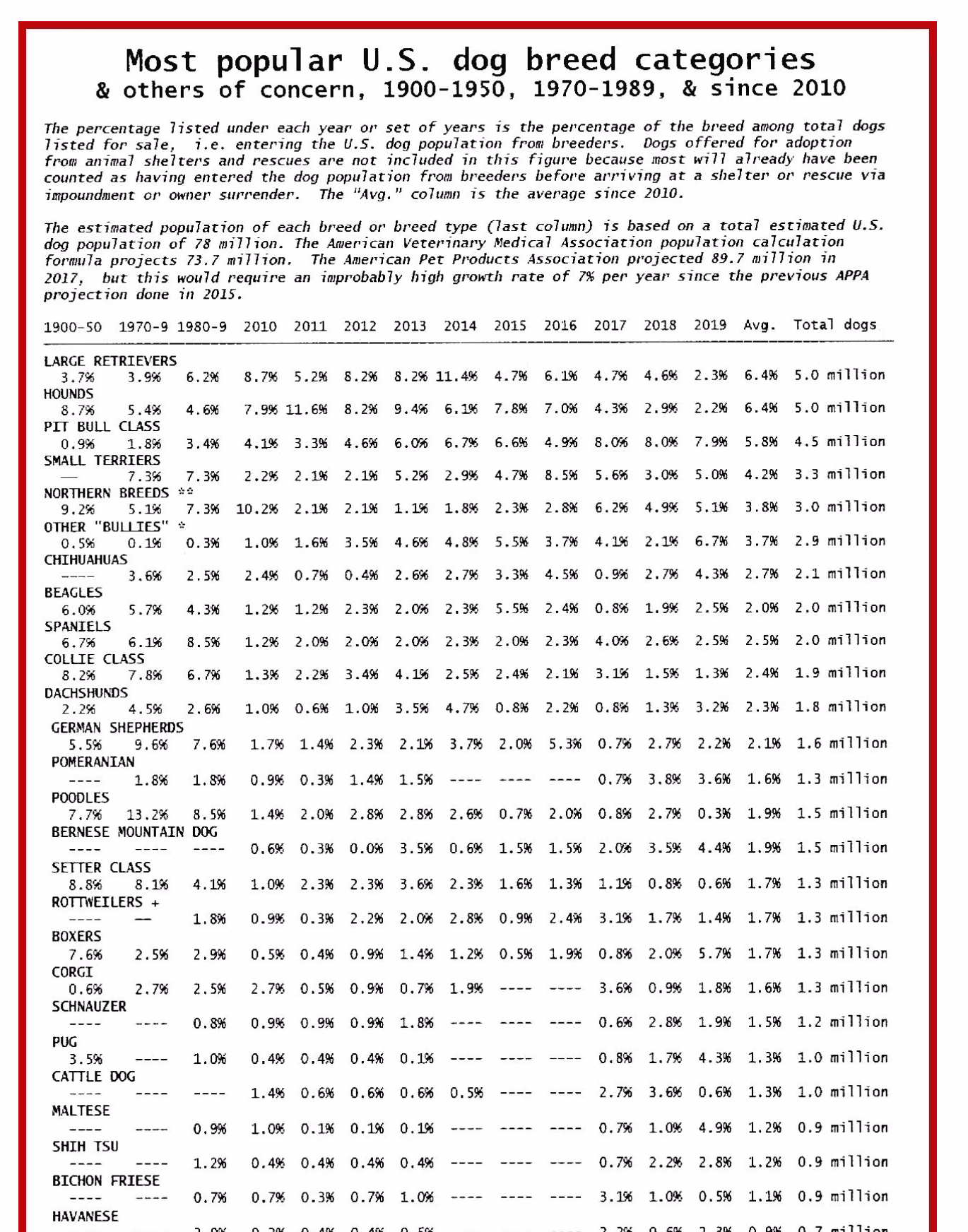
The recent debate over pit bulls in Colorado has completely ignored the overwhelming scientific evidence that has been introduced in the one place Americans go to settle disputes – the courts of law. The discussions in the media and every other place has been one-sided, propped up by the underground pit bull propaganda lobby, funded by secret and suspicious sources. No one has stood up for the future victims and their family, as they don’t yet know they will join that club, and they have no funding for lobbyists. The best source for the truth is the non-profit group, Dogsbite.org, which has recorded that between [2005-18], 311 of the 471 fatal dog maulings in the U.S. were perpetrated by pit bulls – that is 66%. But pit bulls only make up [6%] of the U.S. dog population. Just this past week, pit bulls killed three more Americans. Most victims are females and children in the household of the pit bull owner, where many attacks come at a complete surprise – without any prior behavioral signs of aggression. - Kory Nelson

"No one has stood up for the future victims and their family," Nelson states. No one has talked about the 14 medical studies since 2011 all showing that pit bulls inflicted the highest prevalence of injuries compared with other breeds and that 12 of those studies show that pit bulls also inflicted the highest severity of injuries. No one is discussing that since 2005, pit bulls have inflicted 66% of all fatal dog maulings, yet only comprised 6% of the total U.S. dog population during that period.1

Intentionally ignoring the reliable scientific evidence admitted and considered by judges in these lawsuits to reverse policy decisions is the epitome of recklessness – the conscious disregard of substantial and unjust risk to the health and safety of the public – which amounts to the abandonment of the social, morale and legal primary duty of government. Such an action would subject that government entity to massive levels of civil monetary liability, as the legal protection of governmental immunity could easily be pierced due to this intentional disregard of the risk. The established record of evidence is so substantial as to provide the keys to the treasury to the civil plaintiff’s litigation attorneys who will represent every future victim of a pit bull attack. Rightfully so. - Kory Nelson

Nelson, who also wrote biting commentary prior to Castle Rock City Council repealing their pit bull ban, offered a future liability scenario. "The established record of evidence is so substantial as to provide the keys to the treasury to the civil plaintiff’s litigation attorneys who will represent every future victim of a pit bull attack." Meaning that the city's reckless disregard of reliable scientific evidence admitted to courts pierces governmental immunity; thus allowing attorneys to sue.

Similar testimony was presented to Denver City Council in February by Tom Moe, who drafted the original ordinance in 1989. Mole was asked if the city could be sued if it reverses its pit bull ban. "One of the dangers that I see here is that all this law," referring to the legal rulings in the ban's history, "indicates that pit bulls are a dangerous dog." He added, "This has been supported in a lot of other places," referring to the multiple state and federal court decisions in other jurisdictions.

Question: Someone raised the question whether we might see a court challenge if we were to reverse the position of the city? (3:31:30)

Answer: That's a strong possibility … The first time it got tested, there were a bunch of organizations, including the American pit bull breeders and also the UKC or AKC, at least one of them was involved. There were about four different organizations, so a lot of evidence was presented on both sides, hours and hours. With some modifications to the ordinance, the judge decided it was constitutional. It was appealed again, all the way up to the state supreme court. The state Supreme Court found it constitutional. In my testimony, I mentioned all of the characteristics of pit bulls. The Supreme Court agreed. That it made [pit bulls] more dangerous…

Then it got challenged again when the state of Colorado said it was their purview [after passing a state preemption law], not the localities to decide whether there could be breed-specific legislation. So, once again, Kory Nelson, who is still in the city attorney's office, handled that. And once again, the court upheld the ordinance.

One of the dangers that I see here is that all this law indicates that pit bulls are a dangerous dog. That [pit bulls] have a higher propensity to inflict a severe bites. Not number of bites, but severity of bites. This has been supported in a lot of other places. So, given that, if we pass this ordinance and somebody gets attacked, they could sue the city. And, based on the law, if the city is viewed as reckless, then the recklessness pierces the governmental immunity that protects the city from being sued, and allows somebody who is the victim of [a pit bull attack] to sue the city. And, get taxpayer dollars as a result of that suit. - Tom Moe

Coconuts and Camels

Nelson's post links to an editorial by Krista Kafer, a columnist for the Denver Post, who was part of Nelson's commentary when Castle Rock was discussing the repeal of its pit bull ban. "All she does is suggest that the mothers and fathers of Castle Rock children should offer up their children’s flesh, scalps, limbs and lives on the 'hope' that 100% of pit bull owners are responsible enough, and good enough, to train their dogs against their natural instinct," Nelson wrote in 2018.

In the 13-years of operating this nonprofit, we have seen all kinds of faulty apples to oranges comparisons (but falling coconuts kill more people!) in an effort to minimize the horrific injuries pit bulls inflict on people. In fatal dog attacks, 53% of pit bull victims live in the dog's household and are considered "family" members. Kafer's most recent fairy tale is yet another iteration of this minimization by dangling her anecdotal ferret, cat, camel, horse, hamster, parrot and ostrich bites.

"The fact is dogs of any breed can bite. I’ve been bitten by a retriever, a dachshund and a collie. Yes, a Lassie lookalike bit me in the face. The dachshund’s bite, however, was the deepest leaving both a puncture wound and a bruise. No dog bit me while I was a volunteer at the pound; I was attacked by a ferret and a cat. I’ve also been bitten by a camel, a horse, a hamster, a parrot, and an ostrich. The parrot’s bite was by far the worst. Animals bite for a variety of reasons -- the ostrich liked my shirt and hamsters are jerks -- however, most animals bite out of fear."- Krista Kafer

Kafer's recent opinion piece omits the scientific evidence used to uphold the Denver pit bull ban. It also omits the dozen medical studies that show that pit bulls are inflicting the most severe injuries. Instead, she states, "several studies indicate that pit bulls are not inherently more dangerous than other dog breeds." Kafer also obfuscates facts and belittles people: "there have been incidents of aggression towards other dogs or people," she writes. "For this reason, people are concerned."

Her piece was also factually faulty -- the breed-restricted license does not mandate pit bull sterilization. The city's website states that a pit bull owner must show "proof that the animal has been neutered or spayed, or proof of an intact license from DAP that allows the animal to remain unaltered." Obviously, her piece is a Pit Bull Hack as we defined back in 2016. "A 'Pit Bull Hack' is generally a pit bull protectionist given a media platform to spread misinformation to the public."

As Nelson states about the ballot item, there were no discussions by media outlets that were not one-sided, favoring pit bulls. Not one stood up for "the future victims and their family" who "don’t yet know they will join that club." Some people who voted for this repeal will learn the hard way that the conditional breed-restricted license has no protections for victims. Most incredibly, there is no mandatory insurance. Many victims will have no path for civil recourse after a disfiguring attack.

Summary

At the moment Tom Moe first uttered, "pierces," he was forcefully interrupted by City Council President Jolon Clark, who strongly supported the ban's repeal. The key to suing all government bodies relies on piercing sovereign immunity. In the case of Denver, Moe argued that if a victim could prove the city was "reckless" in repealing the ban, this would pierce governmental immunity (3:33:48). That was an interesting moment for a sudden and forceful interruption by Clark.

We expect such a lawsuit will be filed down the road. It could occur on Mayor Michael Hancock's watch, who boldly vetoed the repeal effort. Hancock's current term ends on July 17, 2023 and he cannot run for mayor again. Meanwhile, we will end with the words of Youtube artist Robert Crawford, who thanked the mayor for his desire to keep people safe back in March. "He's more concerned with people," Crawford said. "Human beings who may or may not get mauled."

Hancock's actions in February demonstrated real leadership and a real commitment to public safety. Kafer does not care if children, adults and senior citizens are mauled. She does not care about the heaviest class of victims that will be mauled and killed either -- pet dogs. Kafer claimed, "When a city has a breed-specific ban, good dogs die." She omitted that when a city lifts a pit bull ban, hundreds if not thousands of "good dogs" will be torn, mutilated and killed by pit bulls.


1When combining multiple years of fatal dog maulings -- say 2005 to 2019 -- one must find the average of the breed's yearly population during the same period. That amounts to 5.8% to 6%. When only looking at one year of fatal dog maulings, such as 2019, we average three years of breed population data, thus 8%. So data that combines 15 years of fatal dog maulings typically has a lower total population of pit bulls.

Related articles:
03/10/20: Citizen Responds After Denver Mayor Vetoed Pit Bull Ban Repeal
02/24/20: Mayor of Denver Vetoes Pit Bull Ban Repeal Legislation, Slowing Hasty Repeal
02/23/20: Denver Dog Bite Statistics by Breed and Injury Severity (2017-2019)
02/06/18: Castle Rock Should Change Its Pit Bull Policy, by Kory Nelson