
Third Pit Bull Adopted Since Aurora Repealed its Pit Bull Ban Inflicts Level 5 Bite to Child's Face

Dog Passed SAFER Test - "No Small Dogs in Home!"

Level 5 bite by adopted pit bull
Level 5 bite injuries to a 5-year old boy inflicted by a recently adopted pit bull.

Council Member Reacts
Aurora, CO - On February 13, a stray pit bull was transferred to the Aurora Animal Shelter from Alameda East Veterinary Hospital. "He had dog bite wounds to his whole body" and "deep bite wounds to the chest." Cotto (AKA Malone) was listed as a neutered American Staffordshire terrier. On February 18, the dog underwent a SAFER evaluation and easily passed, but showed serious dog aggression to small dogs, "No small dogs or cats in home," states the evaluation.

The dog was adopted to 24-year old Austin Chavez on February 27. A week later, the dog inflicted a Level 5 bite to a boy's face. Chavez started driving to the hospital and flagged down a police officer, who provided him an escort. Chavez later explained to the officer that Cotto suddenly jumped off the couch and attacked the boy's face. "Cotto did not let go," states the police report, so Chavez "reached over and under Cotto's upper and lower jaw and pried his mouth open."

Chavez then locked Cotto into the bathroom and rushed the boy to the hospital. Chavez told the officer, "when he got Cotto from the shelter they told him he was a good dog around kids, which is why he got him," states the report. Chavez said he did not feel safe going home to collect Cotto, but he eventually did (to avoid pick up fees from animal control). Chavez took the dog to the Denver Dumb Friends League, a private shelter, where they humanely euthanized the dog.

"This dog came to the shelter from Alameda East as a stray. He was presumbly attacked by a dog. He had dog bite wounds to his whole body. The right front carpus was swolle, 2 lacerations to front left paw pads and deep bite wounds to the chest. He was treated for all of these wounds The torn pad wounds will take some more time to heal, and may require further treatment. Please follow up with your veterinarian regarding this condition. Aurora Animal Shelter is not responsible for any further treatment and/or diagnosis of this condition."

In January, Aurora City Council members repealed the pit bull ban, which took effect on February 14. The unprovoked Level 5 bite occurred three weeks later. The primary debate about the repeal concerned whether voters or city council should decide it. In 2014, voters elected to keep the pit bull ban by a wide margin. Council members repealed the ban in a 7-3 vote anyway. At that time, the city was also threaten with a lawsuit by Matt Snider for "delegitimizing the voters' decision."

Aurora City Councilmember David Gruber, who voted against the repeal, described the facial attack as "heartbreaking" to KDVR. "We just heard from experts [we] shouldn’t fear them, they are no more dangerous than any other dog. Then to find out, low and behold -- three to four months after we made a vote to allow them -- here we go, just breaks my heart,” Gruber said. The lifting of the ban that was in place since 2005 should’ve been voted on by Aurora residents, Gruber said.

Who were the "experts" Gruber referred to? In January, Dr. Apryl Steele, President and CEO of the Denver Dumb Friends League provided a statement to Aurora City Council members in support of the repeal. In it, Steele falsely claimed the city "would be safer" if they repealed the ban because this would allow "citizens to adopt a pit bull from an organization that has several full-time behavior experts evaluating the animal" prior to adoption, instead of obtaining the dog from a breeder.

Every council member is concerned about the safety of our community. This is an issue we take very seriously at the Dumb Friends League. This is exactly why it is vital to create a community where pit bull puppies can be socialized without fear of having them confiscated. This is also why allowing your citizens to adopt a pit bull from an organization that has several full-time behavior experts evaluating the animal prior to making it available, rather than obtaining it from underground resources motivated by profit, is imperative. The fear of bringing the dog out in public, sourcing pit bulls from unscreened dog dealers, and not providing them with veterinary care or training all increase risks to your citizens … Why does this change need to be made now? Too many families have been broken up because their family dog is a banned breed. Please vote to repeal the pit bull ban so that your community can be safer, and families can remain whole." | Read full statement - Dr. Apryl Steele, President and CEO of the Denver Dumb Friends League

The difference between a "dog trainer" at the Aurora Animal Shelter1 evaluating a pit bull versus "obtaining it from underground resources motivated by profit" is a coin flip. SAFER does not even measure the dog's sociability, which is the basis of our preferred test, Assess-A-Pet Protocol by Sue Sternberg. No test can measure unpredictable aggression either -- the hallmark of the pit bull breed. Cotto was also a stray pit bull that was found with serious dog-on-dog fighting injuries.

The Bullshit Meter

Steele scores a 95 on the Bullshit Meter (100 being the highest). Adopting out stray pit bulls does not make a community safer. Falsely implying that SAFER evaluations of pit bulls by "full-time behavior experts" are more accurate than a coin flip does not make a community safer. Falsely implying that any shelter behavior test is "science" is bullshit. Claiming that a pit bull ban repeal will allow "families to remain whole" ignores the families and dogs victimized by pit bull violence.

This victim is a 5-year old boy. There will be many more child victims of pit bull attacks in Aurora due to council members repealing the ban. However, there will be far more seriously mauled and dead canine victims of pit bull violence, primarily small dog breeds. This does not make a community safer, nor does it help families "remain whole." The Aurora Animal Shelter was perfectly fine adopting out Cotto, who if given a chance, would destroy a beloved small dog.

NO SMALL DOGS OR CATS/SMALL ANIMALS IN HOME!!!

Recommend no dog parks due to intense behavior with smaller dogs

Small dog test: Tested with A213618 (M American Eskimo mix) -- As helper dog walked towards the fence line, test dog displayed confident body posture, ears forward, mouth closed, tail straight up, staring at helper dog. Once he was close to the fence, he rushed to the fence and displayed stiff body posture (tail up not moving, ears forward, mouth closed, staring at helper dog). Nose to nose, test dog pulled at the end of the leash to greet helper dog while displaying stiff body posture, tail up not moving, ears forward, mouth closed, intently sniffing helper dog. Test dog then began to slightly wag his tail side to side and handler was able to redirect him away from focusing on helper dog at this point. -DEA

Last week, we published about two European peer-reviewed studies that examined dog-on-dog attacks and dog-killing aggression. We also asked readers a question: Why is there a glaring absence of data and concern about dog-on-dog attacks in the US and UK by institutions and nonprofits that claim to "protect" and "advocate" for dogs? Both studies showed that pit bull breeds were the chief offenders, inflicting up to 5 times more attacks on dogs than all other breeds.

Our answer was the following: "because investigating the prevalence of dog-on-dog attacks and dog-killing attacks could result in more breed-specific legislation, an outcome that multimillion dollar humane and veterinary organizations sorely want to avoid -- even at the cost of pet dogs lives, especially small dogs lives. Motivations of the Denver Dumb Friends League and Aurora Animal Shelter, which urged Aurora officials to repeal the pit bull ban, are cut from the same cloth.

Experience with Pit Bulls?

The Bullshit Meter is especially relevant to Aurora and Denver, given that both had long-term pit bull bans (each over 15 years). Thus, the intake levels of pit bulls remained low and municipal animal shelters could not even adopt out pit bulls. These shelters, for at least 15 years, have largely been removed from the responsibility of assessing pit bulls for adoption. As we can see by Aurora's dismal adoption record, 1 in 3 pit bulls adopted out thus far has resulted in disaster.

"Very affectionate and people oriented boy" and "Thinks he's a lap dog and will sit in your lap to give you hugs and kisses" - Aurora shelter evaluator

Like Cotto, many pit bulls come into shelters as strays with unknown backgrounds. Cotto also came in with fighting injuries. The SAFER test does not measure sociability, nor can it measure unpredictable aggression or many other types of aggression. The small dog test, at least, showed "intense behavior with smaller dogs." Despite the low reliability of many shelter tests today, Cotto was still a completely inappropriate dog for a young family with two small children like this one.


after level 5 bite, bullshit meter increases

The Denver Dumb Friends League President & CEO nearly maxed out the Bullshit Meter.


1The SAFER evaluation was performed by "Desirae A. CPDT-KA," the lowest level of certification. She is a "dog trainer" not a an "animal behaviorist" or "behavior consultant." Add this factor to the bullshit by Denver Dumb Friends League who falsely claimed, "behavior experts" would evaluate dogs prior to adoption. If Aurora falsely communicated to the adopter that an "expert" evaluated this dog, it's just one more reason to sue the city.

SAFER deaths:
04/29/16: 2016 Dog Bite Fatality: Pit Bull Rehomed by Humane Society Kills Newborn Baby
07/07/15: 2015 Dog Bite Fatality: Adopted Out Pit Bull Kills 6-Year Old Boy in  North Carolina

Related articles:
03/11/21: Peer-Reviewed Studies Examines Dog-on-Dog Attacks in UK and Netherlands
06/18/20: Aurora Bite Statistics by Breed and Intake Data Over a Three Year Period (2017-2019)
11/25/14: Aurora Voters Favor Keeping Pit Bull Ban by Wide Margin in First General Election Vote
10/14/14: Aurora Citizens: Do Not Rescind Your Successful Pit Bull Ban

Peer-Reviewed Study Examines Dog-on-Dog Attacks in the UK by Analyzing News Media Articles

Netherlands Study Also Examines Dog-on-Dog Attack Aggression

dog-on-dog attacks studies
Two European studies examine dog-on-dog attacks and dog-killing aggression.

UK Study Abstract
United Kingdom - A study from the UK published in 2020 provides a glimpse into the prevalence and characteristics of dog-on-dog attacks in a public space. This study came three years after a UK survey (underwritten by a pet insurance company) estimated that 64,000 dogs are killed annually and over 44,000 suffered severe injuries due to dog-on-dog aggression. Roughly 15% of adult UK dog owners had seen their pet attacked by another dog during the 12 month period.1

The survey numbers are based on the estimated population of 8.66 million dogs in the UK. About 1.3% of the UK's dog population was affected. If applied to the US (77 million dogs),2 deaths and severe injuries due to dog-on-dog attacks would be over nine times higher. An estimated 1 million pet dogs in the US would be killed or severely injured by dogs each year. This shows a glaring absence of due diligence by humane groups, which claim to "protect" and "advocate" for dogs.


Dog Bites Dog: The Use of News Media Articles to Investigate Dog-on-Dog Aggression

Abstract - Dog-on-dog aggression is a common behavioral problem and has the potential to result in dog and/or human injury, the need for veterinary treatment and financial and legal repercussions. Despite this, few studies of dog-on-dog aggression have occurred. News reports of dog-on-dog aggression provide a method of understanding the demographics of these attacks. National and local news articles between September 2016 and February 2020 were identified through Yahoo and Google news. Information was retrieved including victim/attacker dog information (age, breed, size, sex, injury, veterinary treatment, on/off a lead, with/without the owner/walker), situation, intervention, owner injury, and outcome. In the majority of these attacks, one dog initiated the attack and this dog tended to be a medium-sized breed and off-leash. The most reported attacking breed was the Staffordshire bull terrier. The victim tended to be a small-sized dog, and these attacks often had adverse psychological and physical effects. Costs as a result of the attack ranged from £75 to £9,000 (~ $98-11,800 USD). The owner intervened in just under half of cases and often suffered injuries defending their dog. (Montrose, 2020)


As you read through this post, consider the following themes. "Dog-on-dog aggression is a common behavioral problem," but "few studies of dog-on-dog aggression have occurred." Such studies are rare in the UK and are totally absent in the US. Each year, Animals 24-7 estimates these numbers, but those estimates could be low. At least they are a starting point, given that no regional or national humane or veterinary organization attempts to collect or quantify this data.

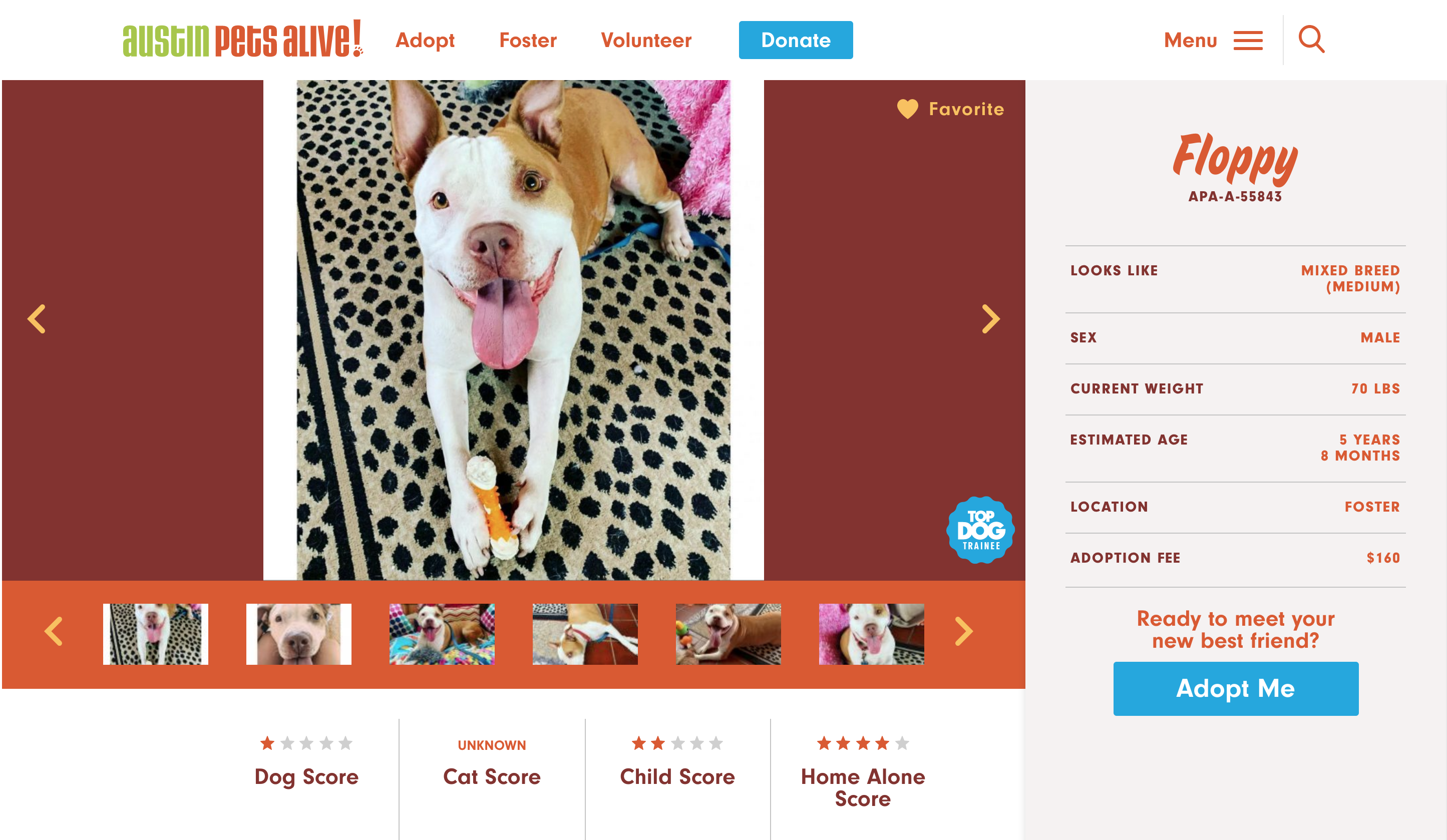
Most humane organizations and shelters not only ignore this problem, they exacerbate it by "continuously" adopting out dogs with dog-killing aggression using concealed language that the dog is "dog selective" (could kill some dogs), the dog "must be the only dog in home" (will kill a dog) or is "reactive toward other dogs" (could kill a dog), Remember "Floppy" at Austin Pets Alive? Floppy is dog-aggressive, has a low children score and is too dangerous to even be cat tested.

Questions to Bear in Mind

  1. Why is there a glaring absence of data -- peer-reviewed and otherwise -- about the most common type of dog attack, dog-on-dog attacks, in the US and UK?
  2. Did the absence of data in this purposefully neglected field of study lead the authors to examine the best and only available source of raw data -- news reports?
  3. Why is there a glaring absence of concern about dog-on-dog attacks in the US and UK by institutions and nonprofits that claim to "protect" and "advocate" for dogs?
  4. Is anyone surprised that bull breeds, selected for bull-baiting and dogfighting, topped the charts in the UK and Netherlands studies, and did so by a landslide?
  5. Humane groups have long attacked the use of news reports to track breeds of dogs that kill humans, yet here is a peer-reviewed study using this very source.

The UK study reviewed 151 news reports related to dog-on-dog attacks published between September 1, 2016 and February 29, 2020. The parameters captured included: article information (publication and date), theme of article, victim and attacking dog information (breed, size, sex, injury, veterinary treatment, on/off a lead, with/without the owner), situation (location and month of attack, context of attack), human intervention and injury, and canine and human outcome.

All attacks occurred in a public space, like a park or street. Significantly more attacks occurred during the summer months (a seasonality that is also true with bites to humans). In the majority of news articles, 1 dog initiated the bite/attack (72.8%; 110). The remaining cases involved 2 (17.2%; 26), 3 (5.3%; 8), 4 (2.6%; 4), or an unspecified number of dogs (0.7%; 1). The most commonly reported breed to initiate attacks was the Staffordshire bull terrier (25.5%; 48), states the study.

The UK banned several fighting breeds in 1991, including the American pit bull terrier, but the Staffordshire bull terrier was not among them.

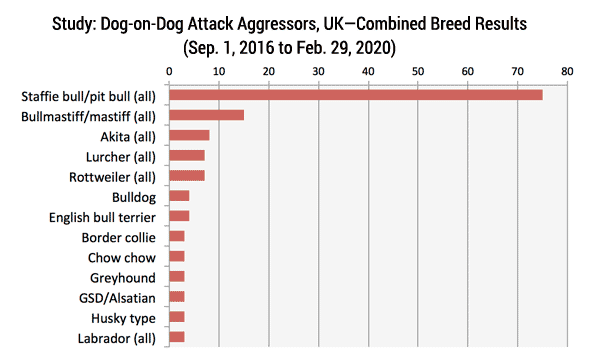
In the US, a pit bull is a class of dogs, which includes: American pit bull terrier, American Staffordshire terrier, Staffordshire bull terrier and their mixes. Taking the US definition of a pit bull into account, our results of the same study table show that the "staffie bull/pit bull (all)" category was actually (39.9%; 75), followed by the "bullmastiff/mastiff (all)" category with (8.0%; 15). Nearly half of all attacks in the UK study, 48%, were carried out by pit bull and bull-baiting mastiff breeds.

We not only combined the "staffie bull/pit bull (all) = 75" category, we combined all breeds when cross breeds were counted as a separate breed. For instance, our "akita (all) = 8" category includes, akita, akita cross and Japanese akita cross; our "rottweiler (all) = 7" category includes rottweiler and rottweiler cross; and our "bullmastiff/mastiff (all) = 15" category includes bullmastiff, mastiff and Italian mastiff. View how the UK study categorized cross breeds as separate breeds.


dog-on-dog attacks UK study

Results of combining pure breeds and cross breeds in the UK dog-on-dog attack study.


Given that we are discussing pit bull breeds and the scant number of studies that do address dog-on-dog aggression and attacks, it's relevant to point out that a 2019 Netherlands study states that 56% of the "dog-killing dogs" seized by police were of the "American Staffordshire/pit bull terrier type." These dogs had "dog-killing aggression," which resulted in the death or severe injury of the victim dog. This data was obtained from Dutch police reports -- not news media articles.3

Breed types of these 128 attackers as derived from police reports are listed in Table 1. These 128 dogs killed a total of 72 dogs. Table 1 shows that more than half of the dogs (56% of 128 dogs) were labeled by owners and/or the authorities as American Staffordshire/pit bull terrier type, and killed 28 dogs (54% of 72 killed dogs) and severely wounded 24 dogs (57% of 42 victims). (Schilder, 2019)

Size of Attacking Dogs

In the UK study, 92 (59.4%) of the 155 attackers involved a medium-sized dog, 23 (14.8%) involved a medium-large-sized dog, 38 (24.5%) involved a large-sized dog and 2 (1.3%) involved a small-medium-sized dog. "Significantly more attacks" were "carried out by a medium-sized dog than expected," states the study. Why is this unexpected? Of the 92 medium-sized dogs, 75 (82%) fell into the "staffie bull/pit bull (all)" category, a dog breed that was engineered for "dog killing."

The majority of attacking dogs (59.6%; 90) were not leashed. The owner of the attacking dog only intervened in 19.2% of cases. Of the 29 cases of intervention, (48.3%; 14) involved the owner actually pulling their dog away, 17.3% involved the owner attempting to pull their dog away and 20.7% of the attacks were stopped by the owner by punching or kicking their dog. In all instances (100%) when the owner of the attacking dog intervened, the victim dog still sustained injuries.

In the small number of cases when the owner of the attacking dog intervened, none did so fast enough to stop injuries from being sustained.

Size of the Victim Dogs

Breed of the victim dog was known in (81.9%; 127) of cases and size could be assessed. Of these cases, (70.1%; 89) involved a small-sized dog. There were "significantly more victims being a small-sized dog than expected," states the study. Why is this unexpected? Anyone who pays attention to this issue knows that pit bulls are primarily attacking small dogs for sport. Yorkshire terriers, cocker spaniels and chihuahuas were the most likely to be attacked in the UK study.

The size of the victim dogs was also discussed in the Netherlands study. 94 of the 114 victims (83%) of dog-on-dog attacks were small-sized dogs. When breed was known, chihuahuas, Jack Russell terriers and Yorkshire terriers were the most frequent victims of dog-killing aggression. "These findings show that small dogs are the predominant type of victims" in our study. The study also listed anecdotes by owners of attacking dogs, such as: My dog "cannot stand small dogs."

Physical & Emotional Injuries

In the UK study, (69.5%; 105) of attacks resulted in the victim dog requiring veterinary treatment. Of those cases, nearly one-third (32.4%; 34) required surgery. In 32 cases, the cost of veterinary treatment was known. The average cost was £1,881.90 with a range of £75-£9,000 (US $98-11,800). Only 17 articles indicated who paid the cost of veterinary treatment: primarily the victim’s owner (14.3%), insurance (11.4%), crowdfunding (8.6%), and the attacking dog’s owner (8.6%).

The owner of the victim dog was present during the attack in (95.4%; 144) of the 151 reported incidents. In nearly half of these cases (49.0%; 74), the owner of the victim dog intervened. In 54 (35.8%) cases, owners of the victim dogs stated that they had suffered some form of physical or psychological injury. The majority of injuries occurred to the hands (46.3%, 25) or hands and other parts of the body (63.0%, 34). In (85.4%; 129) of cases, the attack was reported to the police.4

Only 23 of the 151 attacks reported the psychological effects on the victim dog in the article. 14 dogs (61.0%) were "traumatized" by the attack, 2 (8.7%) became "fearful of everything," 2 (8.7%) began barking at other dogs, 2 (8.7%) were afraid to go outside, 1 (4.3%) became fearful of other dogs, 1 (4.3%) displayed signs of fear aggression, and 1 (4.3%) had a "change of personality." Conditions ignored by humane organizations that claim to "protect" and "advocate" for dogs.

Summary of Studies

"In the majority of the documented biting incidents, one medium-sized dog, most commonly reported to be an off-leash Staffordshire bull terrier, initiated the attack on a small-sized dog," states the UK study. This result is similar to the Netherlands study, which found that (56%) of dogs seized by authorities for killing or severely wounding other dogs were American Staffordshire and pit bull terrier types. Both studies also showed that small dogs were the most common victims.

Unlike the Netherlands study, the UK study omits that Staffordshire bull terriers were associated with blood sports and dogfighting. The UK study also victimizes the bull breed, despite it being the primary initiator of attacks: "While these findings could be interpreted to suggest that Staffordshire bull terriers are a risk to other dogs, it is important to note that Staffordshire bull terriers are a stigmatized breed and are often perceived as aggressive, unpredictable, and dangerous."5

Despite small dogs being the most frequent victim, the UK study also blames them by generalizing speculations and anecdotes stated in the Netherlands study about them. "It has been suggested," states the UK study, this might in part be due to small breeds "being misidentified as prey" or as a result of "displaying behaviors (e.g., barking, tail up behavior), which might have the effect of provoking an attack." Concluding, "smaller breeds may inadvertently provoke attacks."6

In the UK study, small-sized breeds were the aggressor in 0% of cases. Despite this, there is pervasive small dog victim-blaming in the study.7

Addressing the Questions

Why is there a glaring absence of data -- peer-reviewed and otherwise -- about the most common type of dog attack, dog-on-dog attacks, in the US and UK? Answer: Possibly because the results would be self-evident, just as the UK and Netherlands studies show. Pit bull breeds, which were selected for the blood sport of dog-killing, are inflicting the most severe injury attacks (57%; Netherlands study) and the most dog-killing attacks resulting in death (54%; Netherlands study).

Why else is there a glaring absence of data? Answer: Possibly because investigating the prevalence of dog-on-dog attacks and dog-killing attacks would only provide further evidence that pit bull breeds are correctly "perceived as aggressive, unpredictable, and dangerous," just like the human injury medical studies show in both fatal and nonfatal injury studies. Also, investigating the prevalence of dog-on-dog attacks and dog-killing attacks could result in more breed-specific laws.

Did the absence of data in this purposefully neglected field of study lead the authors to examine the best and only available source of raw data -- news reports? Answer: Yes. This same absence of data is also why our nonprofit uses news reports to capture "breed data" in fatal human attacks inflicted by dogs. As revealed in both this peer-reviewed study and our own work, multi-sourced news articles provide a rich and accurate data set that stands up to the rigors of peer-review.

Of course multi-sourced news articles are only part of what DogsBite.org tracks. We also collect photographs, videos, police reports, coroner reports and legislative materials that arise after a fatal dog mauling.

Why is there a glaring absence of concern about dog-on-dog attacks in the US and UK by institutions and nonprofits that claim to "protect" and "advocate" for dogs? Answer: Again, possibly because investigating the prevalence of dog-on-dog attacks and dog-killing attacks could result in more breed-specific legislation, an outcome that multimillion dollar humane and veterinary organizations sorely want to avoid -- even at the cost of pet dogs lives, especially small dogs lives.

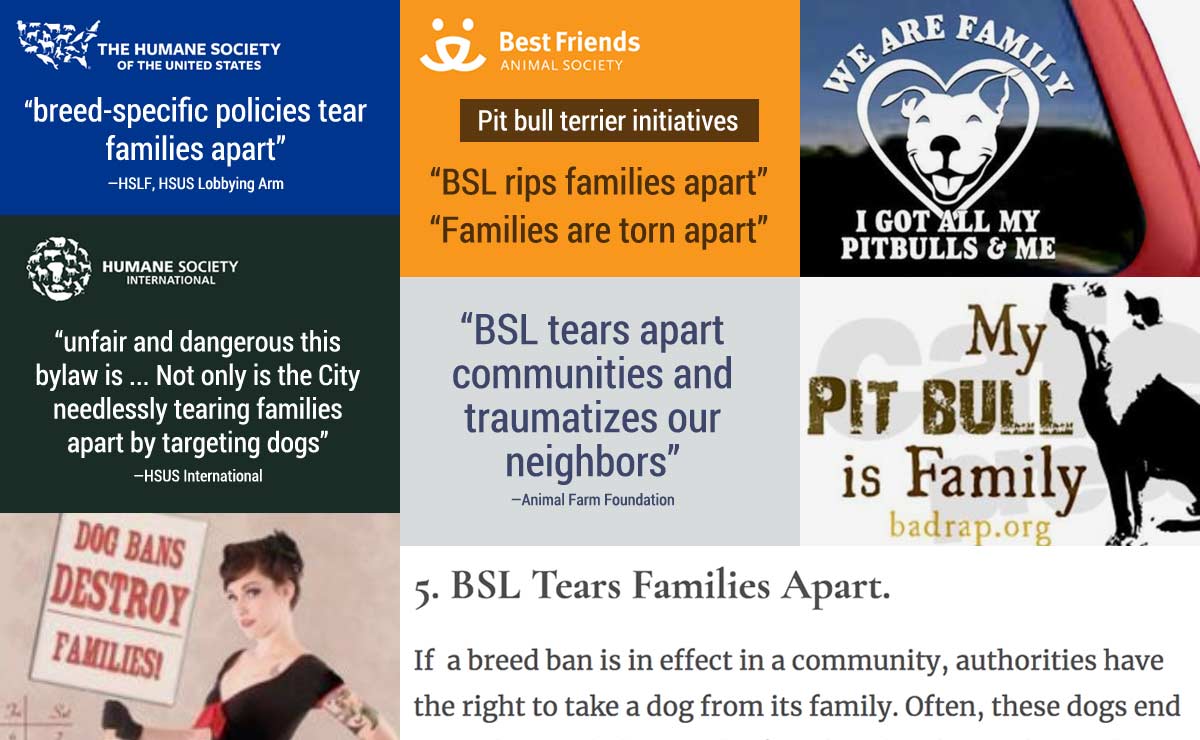
These same humane groups claim that breed-specific laws break the "human canine bond." They often use the slogan, "BSL destroys families" to repeal breed-specific laws. However, they always ignore the horrible physical and psychological trauma done to both owners and pets by bull breeds that horrifically breaks the "human canine bond." They instead sympathize with the "stigmatized" dog-killing aggressors and adopt out dogs with severe dog aggression into our communities.

Is anyone surprised that bull breeds, selected for bull-baiting and dogfighting, topped the charts in the UK and Netherlands studies, and did so by a landslide? Answer: Except for the authors of the studies, no one is surprised. Dogs purpose bred for dog-killing aggression are the most "efficient" dog-killing breeds on earth. It's not rocket science. No one is surprised that racing dogs are the fastest dogs on earth or that herding dogs are the most effective herding dogs on earth either.

Finally, humane groups and pit bull defenders have long attacked the use of news reports to track breeds of dogs involved in fatal dog maulings, yet here is a peer-reviewed study using this very source. How do you think mass shootings are tracked in this country? (View incident and source). How do you think backovers, frontovers and hot car deaths of children are tracked? A collection of news accounts by nonprofits because official sources can be less accurate or worse, absent.

Too Few or Too Many?

Historically, large bodies undercount events when incidents are low. This is a problem with large data sets, such as the US population of 328 million. CDC tracks hundreds of causes of death, including, deaths by being bitten or struck by a dog, but the smaller the number of deaths, the more unreliable the data. The online tracking of mass shootings, also a low incident event, is a relatively new research goal because the government has never defined a "mass shooting."

"Too few" events is not the case regarding violent dog-on-dog attacks. The UK survey estimated that over 100,000 dogs are killed or suffered life-changing injuries due to dog-on-dog aggression in 2017. Roughly 15% of adult UK dog owners had seen their pet attacked by another dog during the period, according to the survey based on 1,003 adults who own dogs. In the US, few animal control agencies even track damaging dog-on-dog attacks; only bites to humans are tracked.

There is obviously little to no tracking by the UK government since a "survey" underwritten by a pet insurance company is one source of data and the other is a peer-reviewed study based on media articles. As required by Dutch regulations, at least dog-on-dog attacks resulting in severe and fatal injuries are tracked by police. Those attacks were dominated by pit bull breeds, as were dog-on-dog attacks studied in the UK study, and attacks compiled annually by Animals 24-7.

Don't Track Any Data

What is the easiest way to lower the prevalence of a disease? Stop reporting it. That is the role that humane groups, which claim to "protect" and "advocate" for dogs have taken in the US. That is the role that veterinary groups have taken here as well (technically, both never started reporting it either). These same groups also try to discredit dog-killing aggression data collected by Animals 24-7, because their goal, apparently, is for no entity to track or quantify dog-on-dog attack data.

The glaring absence of data about the most common type of dog attack in the US, dog-on-dog attacks, is the direct result of multimillion dollar humane and veterinary organizations refusing to collect data or to investigate this area of damaging attacks. They don't want the public to know the self-evident results: fighting breeds are largely responsible. When data does arise, they are quick to victim-blame small-size dogs, who are victimized the most in these horrific attacks.

Further Reading

In a 2006 paper, animal behaviorist Alexander Seymonova touches on some of these issues (Aggressive dog breeds: Document nr. 3). She discusses the "sudden denial" of abnormal aggression and heritability of behavior by professionals in the dog world. She also discusses dog-on-dog attacks and killings, which are vastly more common than attacks on humans. "In fact, there is a slaughter of ordinary, non-aggressive household dogs" occurring on the streets, she states.

dog-on-dog attacks

Some of the small dog breeds frequently injured or killed in dog-on-dog aggression attacks.

1Dog Fights – 64,000 Canines Die In 12 Months, by Direct Line Pet Insurance, survey conducted by Opinium, 2017.
277 million is derived from the AVMA's 2017–2018 edition of the Pet Ownership and Demographics Sourcebook.
3Intraspecific killing in dogs: Predation behavior or aggression? A study of aggressors, victims, possible causes, and motivations, by Schilder, et al., Journal of Veterinary Behavior, 34 (2019) 52e59.
4In the UK study, 85.4% of the dog-on-dog attacks were reported to the police. This is an exceptionally high percentage and points to the UK Dangerous Dogs Act. In the UK, "It’s against the law to let a dog be dangerously out of control anywhere, such as: in a public place, in a private place, for example a neighbor’s house or garden, in the owner’s home. The law applies to all dogs,"states the government's website. "Your dog is considered dangerously out of control if it: injures someone or makes someone worried that it might injure them. A court could also decide that your dog is dangerously out of control if either of the following apply: it attacks someone’s animal or the owner of an animal thinks they could be injured if they tried to stop your dog attacking their animal." The penalty if your dog is considered "dangerously out of control" includes: unlimited fines, prison time (up to 15 years if you allow your dog to kill a person), your dog subject to destruction and the inability to own a dog in the future, states the website.
5Several UK websites report that shelters are "inundated with requests to take in staffies and their crossbreeds because of the growing numbers being over-bred and abandoned," much like how pit bulls are over-bred and flood shelters in America. One of the websites cited by the study does state the history of the breed "Dating back to the 1800’s, the Staffordshire Bull Terrier was mainly bred for ratting, bull baiting and dogfighting." (dogstrust.org.uk).
6The Netherlands study specifically stated, regarding the anecdotes and speculations of why smaller dog breeds were the majority of victims: "This data set does not allow for the conclusion that generally smaller dogs are more likely to be attacked than larger dogs, and conclusions about motivations are speculative."
7It is generally agreed upon that dog-on-dog aggression is common, in that it is largely comprised of "ritualized aggression" (barking, growling, showing teeth, etc) in an effort to avoid real aggressive encounters. Dog-on-dog "killing aggression" (inflicting severe and fatal injuries to dogs) is much less common, and is what the UK and Netherlands studies investigate. Thousands of years of "ritualized aggression" and tolerance by domesticated dogs among each other, in an effort to avoid damaging aggressive encounters, should be able to withstand the "barking or tail up behavior" by a small dog without this leading to uncommon dog-killing aggression. Small dogs "being less obedient" than larger dogs, as the UK study reports, also should not lead to uncommon dog-killing aggression.

Related articles:
01/28/21: Why Aren't Dangerous Dog Owners Charged With Animal Cruelty? by Dog Lover
09/17/10: Craven Desires: Weekly Frankenmauler Round Up Collection -- Mostly Small Dogs
05/05/09: Alexandra Semyonova: Heritability of Behavior in the Abnormally Aggressive Dog

2021 Dog Bite Fatality: Woman Killed by Pack of Dogs in Porter, Texas During State Power Crisis

porter woman killed by dogs
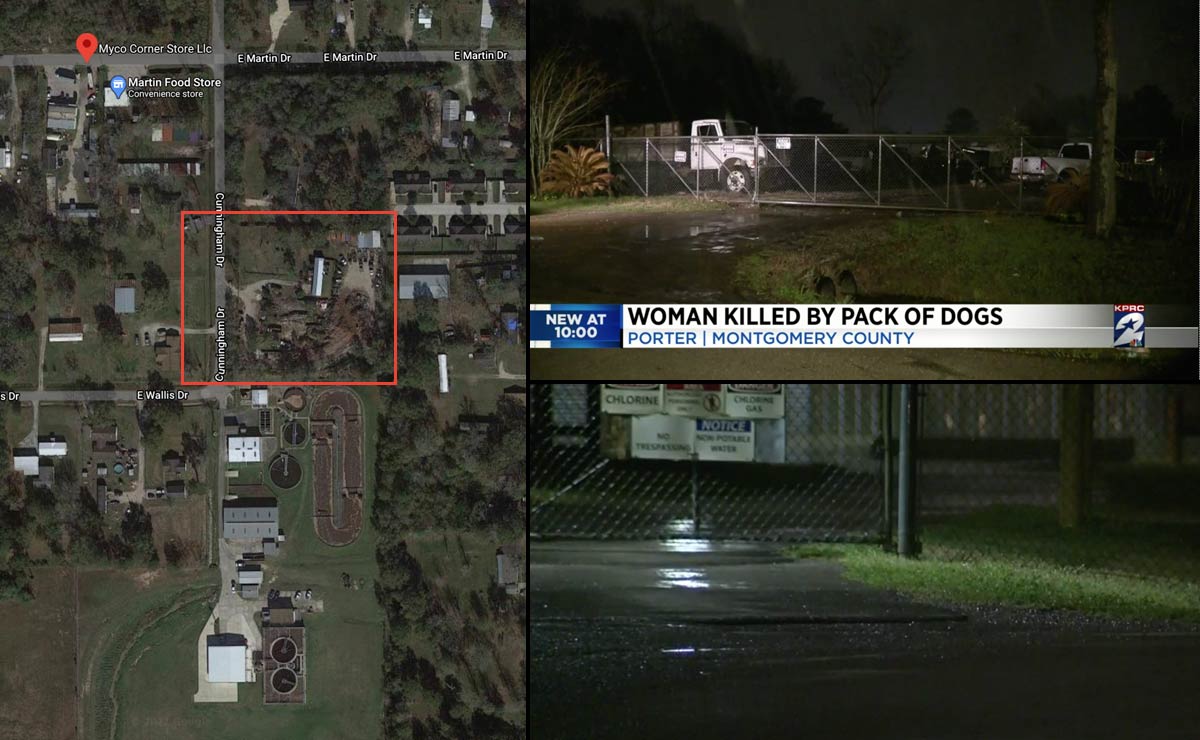
Deann Stephenson, 59, was killed by a pack dogs on February 15 in Porter, Texas.

Woman Killed by Dogs
Porter, TX - On February 15, the Montgomery County Sheriff's Office responded to a reported animal bite on Cunningham Drive at about 1:00 pm. Deputies "immediately called for EMS as they had a 59-year old female who was attacked by a pack of five dogs. The deputies attempted to stop the massive bleeding by applying tourniquets to the extremities," reports the Montgomery County Police Reporter. The victim was transported to Kingwood Medical Center in critical condition.

The victim suffered bites to her face, legs, arms, back, and neck. She died sometime after reaching the hospital. She had been walking to a corner store when the dogs ran through an open gate and attacked her. Montgomery County Animal Services took possession of the dogs. Five days later, the victim's sister, Holly Jorgensen, began a fundraiser and identified the victim as Deann Stephenson. The funds will be used to help pay for her funeral and memorial services.

We first became aware of this fatal attack on March 1, when KPRC-TV aired a segment about her death. Recall that on February 15, millions of Texan residents were without power, including this nonprofit. The high temperature in Porter that day was 25 degrees and roads were snowy and icy. Fire and EMS were severely taxed out due to fires, numerous car accidents and trying to clear roads. In the midst of this statewide catastrophe, Deann was fatally attacked by loose dogs.

After her death, family members hired attorney Patrick O'Hara, who has represented many dog attack victims in Montgomery County, reports KPRC-TV. Family members said these same dogs, or at least one of them, had previously attacked other neighbors, including a child. “And still, no criminal charges have been filed against the dog owner. This is horrific, these dogs should have been put down years ago,” O’Hara said. A lawsuit is expected to be filed later this week.

The dogs' owner appears to be a business located in the 24800 block of Cunningham Drive. Hanging on the chain link fence were "Beware of Dog" signs, as well as Chlorine Gas notices. Hauling trucks were seen behind the fencing. We have certainly seen fatal attacks inflicted by junkyard-guard dogs before. In those cases, the auto repair and wrecking companies were likely required to carry insurance. It is unsurprising there will be a civil lawsuit filed in short order.

In January of this year, Montgomery County had another high profile dog attack involving a long-term reckless dog owner. Jennifer Romano, 46, was charged with two felonies -- injury to a child, a 2nd degree felony, and tampering with evidence, a 3rd degree felony -- after her fake service pit bull bit a child in the face unprovoked. Romano fled the scene after the attack. A Montgomery County judge ordered her pit bull, which had previously bitten two people, to be euthanized.

Afternoon Update

In the afternoon, the Houston Chronicle reported more information. Deann died the same day as the attack. Four dogs were involved in the February 15 attack. Montgomery County Animal Services (MCAS) identified them as a mixture of hound, shepherd and black mouth cur breeds. The animals were euthanized. Their owner, who has not been named, was issued citations for failure to provide proof of rabies vaccination and failure to properly confine the dogs, MCAS said.

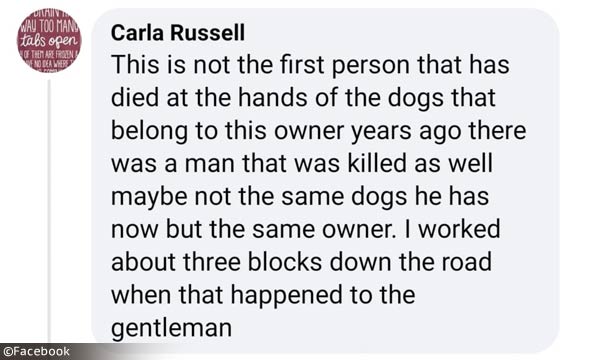
A neighbor witnessed part of the attack and told MCAS that he tried to help the woman, while his wife called 911. Detectives and the Montgomery County District Attorney's Office are investigating whether any charges will be filed against the dogs' owner, reports the Chronicle. The attorney for Deann's family said that multiple people had been attacked by the dogs in the past. Unverified claims on social media said that dogs belonging to this same owner had killed a man years ago.


woman killed by pack of dogs porter

Some  people on social media are saying the owner had dogs that killed a person years ago.

Related articles:
01/11/21: Rescuer Involved in Highly Litigated 'Gus' Case, Flees Scene After her Fake...
07/12/17: 2017 Dog Bite Fatality: Pack of Dogs Kill 79-Year Old Man in McCreary County
03/21/15: 2015 Dog Bite Fatality: Pack of Pit Bulls Kill Man in Jefferson County, Arkansas

Webinar: Shelter Dog Behavior Review with Sue Sternberg and Gia Savocchi - Reviewing Worst-Case Scenario Dogs

These Types of Dogs Should Not be Placed into Our Communities

Webinar: Shelter Dog Behavior Review with Sue Sternberg and Gia Savocchi - Fall 2020.


Oyster Bay, NY - In a rare appearance on YouTube, we are able to bring to you the expertise of animal behaviorist Sue Sternberg, who has been crafting the Assess-A-Pet Protocol test for shelter dogs since the 1990s. While professionals and the public can always access paid webinars of Sternberg, it is an atypical occasion to witness and learn from her in a two hour YouTube video, where she reviews worst-case shelter dog scenarios with behavior specialist Gia Savocchi.

Savocchi is currently the contracting behavior specialist at the Oyster Bay Animal Shelter. On the day this video posted, Savocchi was in the news after she posted a TikTok video in response to the harassment she receives from no-kill animal "advocates," who believe that no aggressive behavior -- including killing dogs and people -- is enough to warrant humane euthanasia. This also involves animal cruelty because keeping these dangerous dogs caged for years on end is cruel.

Savocchi was also a whistleblower in a two-part news investigation last year of the North Shore Animal League. The shelter had been hiding the dangerous histories of some dogs available for adoption. Savocchi and her colleague John Bishow-Semevolos said they were directed by their superiors to hide the biting history of dogs and use euphemisms instead. There was also a pattern of bullying by upper management that encouraged employees not to disclose these behaviors.

The Lay of the Land

There are no-kill shelters that habitually lie to adopters by failing to disclose aggression and biting histories of dogs. Only California and Virginia have passed mandatory bite disclosure laws making this illegal. Some shelters even drug dogs to mask aggression. Savocchi's honesty shows us that there are still excellent shelter behaviorists at work -- placing public safety above no-kill's single metric 90% "save rate" -- but they face harassment from misguided no-kill animal "advocates."

Now Savocchi and Sternberg come together -- in a dynamite duo -- to share the evaluations of worst-case shelter dogs, whose behaviors are so dangerous that there is no place for them to safely reside. These dogs are not rehabilitatable, even housing or transporting them is a huge risk. Years ago, our nonprofit began documenting the rise of dangerous dogs being warehoused in shelters and adopted to the public under the guise of "no-kill." Today, the situation is worse.

Background and Testing

Before watching this video, it is important to understand parts of the Assess-A-Pet Protocol. This video provides the basics. Essentially, it is built around the dogs' sociability. The lower the sociability, the greater risk of future aggression. For example, despite this dog appearing friendly, Sternberg states, "there is no social gestures, the domestic dog qualities are not in him." Once you understand sociability, you are on your way to understanding Sternberg's 4-part assessment test.

It is also important to understand that the Oyster Bay Animal Shelter, where Savocchi began working in early 2020, was under a one-year moratorium ceasing all euthanasia from March 2019 to June 2020, due to outcries by no-kill animal "advocates." The moratorium forced the shelter to keep some of these dogs, even "behavioral emergency" cases, as seen in the video, alive. The moratorium was lifted in June 2020, but the battle rages on. Savocchi inherited this mess.

  • The moratorium on euthanasia resulted in a large population of aggressive dogs being "warehoused" at the shelter. When there is a high population of aggressive dogs, the aggression is a contagion; it affects the entire shelter population.
  • Savocchi had to evaluate all of these dogs -- some had been there for two years -- to determine which ones were adoptable. She discusses the behavior of six dogs with Sternberg; most were euthanized for severe aggression or resource guarding.
  • There is no place for these dogs to go when euthanasia is refused. Not even sanctuaries can handle these dogs. You will learn about "Ruby," a dog with no sociability and severe animal aggression that a rescue filled with cats wants to adopt.
  • The role a shelter should play is to protect people and dogs by making wise euthanasia decisions. Keeping reactive dogs alive with a forever future of being caged, isolated and frustrated for the sake of a higher "save rate" is inhumane.
  • Protests, petitions and outrage by no-kill animal "advocates" indicate they have a complete lack of knowledge of normal dog behavior and a complete lack of knowledge of the limitations of behavior modification and of dog training.
  • Sternberg stresses that some shelters only see these types of extreme behaviors (they've never even seen a highly sociable dog), which normalizes these behaviors. Severe aggression cases should be abnormal, but today, they are more common.
  • There is a 13 minute excerpt of this webinar - Excerpt of the Canine Behavior Review Webinar (Sternberg and Savocchi). Precious, a "behavioral emergency" case is featured, along with Sternberg's analysis that her behavior is not normal.

Breaking Down the Webinar

Ruby, female pit bull 5:15 - Dog has predatory behavior, killed a cat at the shelter and attacked a dog through a fence. Dog is under a legal proceeding; a trust was created to try to seize her from the animal shelter to place her into a rescue. The dog has been in legal limbo for two years. Dog can open up gates. The rescue that wants the dog is an indoor facility of about 2,000 square feet with cats and dogs, primarily cats -- about 110 to 150 animals in the space already. (See the environment Ruby, a cat killer, would be kept in.) Sternberg talks about the frustration a dog like this would experience in the "cacophony" of this type of environment. Sternberg also talks about the inherent problem with sanctuaries, which often fill up quick because the person running the sanctuary can't say "no" to new animals.

(18:53) Sociability test - "So far, no sociability," Sternberg remarks. Frontal reorientation, not so great red flags. Chair test - Lunge-a-ways, shoulder swiping, scent marking, zero sociability. Not good. (24:46 notice how you can hear the test in the background? This is to ensure objectivity and consistency). Teeth Exam test - That's a "really low threshold." Basically testing for annoyance, how does the dog handle it? Zero sociability and two very low thresholds so far. Toy test - Frontal reorientation, squared-off, a direct threat. She's not fearful, she has total confidence. Showing all signs of serious aggression risk.

(33:30) "I call her a (habituated) predator," Sternberg said. "She has none of the qualities of a pet dog, of a domesticated dog. In other words, there is no sociability. No deference to people. She doesn't look for clues. She doesn't check in with people. She's completely on her own and independent," Sternberg said. (37:25) "This is the kind of dog that can look like she can pass an assessment, particularly some of the other assessment procedures that are out there, especially if you are not looking at sociability or lack of sociability. But this is a really dangerous dog … Her aggression thresholds are so low, and high predation."

(39:00) Decoy Dog-to-Dog test - The dog aggression test with a stuffed dog. It's a classic attack; she immediately grabs it and does not let go. After the attack, the dog totally disengages, and "walks around and sniffs and pees," Savocchi said. "I see that and I've seen it in other dogs. It's so scary," Sternberg replies. "I don't know why that is more disturbing. I think there is a casualness to the aggression … She's a fighting stock pit. That level of ignite at the sight of another dog, grab, full mouth bite, head shake, not let go. That's not rehabilitatable," Sternberg said.

(44:00) Live Dog-to-Dog test - (Please do not try this at home!) "The only thing holding her back is a leash and leashes will fail. The only thing holding her back is a human and humans fail. Even just transporting her is a huge risk," Sternberg said. The live test shows why decoy dog tests are valid and also do not expose live dogs to potential harm. (46:10) "This isn't curable … This is hundreds of years of genetics in this dog." (Recall that a rescue filled with cats is trying to take ownership of Ruby.)

(46:44) "This is our responsibility as an animal shelter for the community. We cannot place dogs into the community that are going to hurt or kill dogs, that are going to hurt or kill children," Sternberg said. "This level of arousal and predation absolutely will transmit to children as well. She has no sociability. She has no off switch. She has no deference … there is no social gestures, social communication. She's on her own."

(50:45) Baby Doll test - Dog tries to eat the baby doll, but dog responds very differently to a toy ball (55:23), which elicits no arousal. Child Doll test - Extremely high arousal. Dog immediately grabs doll in jaws, lifts it off the ground and parades around the yard while gripping the doll around its waist (which reminds us of this 1897 image). "The combination of the resource guarding, so she stays away … Oh my God, this is so scary. I wish it were less common these days. But it's not," Sternberg said.

Precious, female pit bull, 1:03 - Shows the injuries after Precious and Ruby got into a fence fight. Precious has been in and out of shelters her whole life. Savocchi asks if it is valid for animal "advocates" to say, "Any dog will fight through a fence." And that Savocchi should not negatively score a dog for fence fighting.

(1:04) "No," Sternberg said. "This is what happens when people only see fighting stock guarding breeds and mixes in the shelters, who have such dog aggression and such arousal and frustration problems, that this becomes normal," she said. "This is not normal. This is not what dogs do … a normal dog will fence fight and there is no contact. It's all display" (posturing and noises). Referring to Ruby and Precious, due to their genetics, "there is no place where they are able to be with access to their instincts because they're not bred as dogs. There is no way to fulfill them. It's a cruelty to keep them alive. There is no way to provide the enrichment that they would really need in a safe way."

(1:07) Precious in her kennel with repetitious pacing. "This is a cruelty. This is a cruelty to animals. Crossed the line," Sternberg said. "I call this a behavioral emergency." The dog has lost quality of life. It is a response to an abnormal environment. "There is not a person who would go to a zoo and watch a gorilla doing this or a wolf, pacing and lunging and circling over and over again, and say, 'Oh, that's okay.' It's not okay. This is cruelty to animals in the highest form," Sternberg said.

(1:11) There was a protest after Precious was euthanized. Protesters said, "She's a good dog. She just needs to go to a house without other animals." After watching the Dog-to-Dog test, Sternberg goes into the concept of "game" and being "game bred." Precious was not playing with the stuffed dog -- play is reciprocal. "What she is showing, her motor patterns, all of her behaviors are to kill. She's not doing it out of anger." She added, "These dogs do not belong in our communities. When shelters place these dogs or send them to rescue and they get loose and hurt somebody else's dog or a person? The emotional and financial liability? It's so irresponsible. It's got to stop. This is all in the name of a complete lack of knowledge of normal dog behavior, and a complete lack of knowledge of the limitations of behavior modification and of dog training."

Male pit bull, 1:17 - Dog was confiscated from a squatter house. Broke one of his teeth while being captured with a catch pole. Took a week at the shelter before they could take him out of his kennel. Due to his behavior, Savocchi skipped the first test and went directly to the resource guarding test. Dog already had severe resource guarding of his bowl while in his kennel. The dog quickly acts out during the test. "The earlier in a sequence that a dog hits an aggression threshold, the more dangerous the dog," Sternberg said. "That was a grab, bite, head shake. These are damaging, hospitalizing bites."

"So is this a dog I should have tried to rehabilitate?" asks Savocchi.
"No," Sternberg answers. "You can't change these aggression thresholds. This isn't a food bowl issue. This is a resource guarding, a guarding issue. This is a guard dog. Here's the thing, you neuter him, his appetite goes up. Now, he is worse, if that is even possible. No, this level of resource guarding is so serious. That dog, no sociability to humans. These are really dangerous combinations. These are not pet dogs. So dangerous."

Male chocolate lab, 1:19 - Savocchi also skipped the first test and went directly to the resource guarding test. Savocchi believes dog may have never lived in a home before. He was found running loose by a police officer. The dog tears off the access-a-hand then starts to guard it. Savocchi believes the dog was transported to Long Island by a rescue transport then set loose by the transport or rescue when they realized he was a problem.

"So guarding edible and non-edible, like the access-a-hand is non-edible, is a predictor of much more serious resource guarding. It's predictive of absolutely not being able to manage the dog in a home situation. He will guard everything and his level is really serious, and he has no sociability to people," Sternberg said. Once the moratorium was lifted, the shelter was able to euthanize the worst cases, this dog being one of them. "He was clear cut not adoptable," Savocchi said.

Dexter, male pit bull-mix, 1:23 - Dog had been at the shelter for two years. Adopted to two different homes. 3-years old, neutered and a repetitive kennel spinner and kennel reactive. They put the dog on Prozac. Dog fails sociability test -- high tail, giant shoulder swipe, giant anal swipe. "He likes me clearly," Savocchi said. "Well, he likes you as his property. So far has shown you no respect or sociability," Sternberg replies.

(1:27) During the Stranger test, the shelter director was even afraid of the dog.  "Your shelter director is uncomfortable with the dog, like, 'end of test,'" Sternberg said. "For good reason. This is a dog who, with hesitant communication, will show aggression. The world is filled with hesitant communication." Next, Savocchi tests with a female that is not a stranger. Dog still exhibits guarding behavior. Savocchi states the dog has never done anything to any of the "women" at the shelter (indicating the dog is man-aggressive), but he did try to redirect on her one time, when he went to take a lung at a man. "And that is resource guarding," Sternberg said. "That is when you get a redirect."

"So, he was going after a man?" Sternberg asks. Yes, Savocchi said. "End of test. End of evaluation. I mean, I hate to be flip about it, but what are we doing in the shelter world today, right? What are we putting out into our communities? He's not a beagle. He's a giant, muscular, athletic dog. Capable of great damage."

During the Chair test, the dog displays behavior, which predicts "aggression to strangers, territorial aggression in the home. If there is another dog in the home, it predicts dog-to-dog aggression because the dog is owner guarding," Sternberg said. "It's a guard dog, not a pet."

After the tests, we learn more about the history of the dog. This dog was adopted out to a home with a Maltese before I was around, Savocchi said. They returned him because he was too hyperactive in the home.

He was recently adopted out to a single adult man. That man pulled him off Prozac nearly completely (he was in the home for three weeks) then decided to take him to the dog park. During one occasion at the dog park, the dog attacked an adult female boxer (dog-to-dog aggression), requiring a $300 vet bill. Next he went after someone who was coming into the home (territorial aggression in the home). Bit him on the finger. No stitches needed. Later he was taken to an off-leash park when no other dogs were there, in a fenced-in area. A town employee went into the area to change the garbage can and the dog attacked the person (aggression to strangers and/or territorial aggression). No bite, but the dog had to be tackled and forcibly restrained.

Prior to being told the history of this dog, and only being shown a few short clips of the tests, Sternberg predicted these behaviors.

(1:34) "You should be able to take your dog to a dog park. Then [the adopter] said, 'Why not take him to a dog park when no one is there?' And a man shows up. What if he had killed the town employee? What if he had just knocked him down and he hit his head? These are life-changing events," Sternberg said.

The general public -- Level 1 dog owners -- do not understand what it means to own a dog like this. They may think they can handle a dog like Dexter, but have no basis or qualifications to make that assessment.

(1:35) "The only people really qualified to take a dog like that is someone who lived with a dog that had that level of aggression. And, anyone who has already lived with a dog with that level of aggression, will say 'No thanks' to their next dog having the same issues," Sternberg said. "That's the paradox. Once you realize that, you realize that all we are doing is duping someone into adopting a dog because they don't truly understand."

Teddy, male cane corso, 1:36 - Teddy was found running loose with a female dog. It took multiple animal control officers and police officers hours to capture the two. He was very aggressive. This dog was so dangerous, he was never let out of his cage -- not even one time -- until he was euthanized one year later. Due to the moratorium on euthanasia, he could not be euthanized sooner. No-kill animal "advocates" claimed this dog could be rehabilitated with up to three years of training.

Savocchi would not let him out of his kennel because the risk to shelter staff was too high. Teddy fixated on certain people. His behavior was so bad to certain people that Sternberg said, "That's abusive to the staff person."

Teddy has broken many of his teeth by biting the bars of the kennel. This dog found a way to get under the guillotine door too (1:40). Gasps and "Oh my God!" is heard while watching the guillotine door sequence.

(1:41) "Because what you have here is a predator beast. He's not a dog," Sternberg said. "Your kennels are set up to house dogs. He's no longer a dog. There is no one who could look at that video and think that is not abject cruelty to animals. That's got to stop." Sternberg also comments, rightly so, that Teddy could kill a shelter worker. "You can't get him out [of the kennel], he's too aggressive. He's going to kill one of your employees. If he can open the guillotine, somebody is going to go in there to clean, you're going to find them dead. It will be the most horrible death."

Finally, Sternberg discusses that no behaviorist would look at Teddy and say, "Yeah, we can train him." Only charlatans would, she said. The dog has "all of the hallmarks of a dog that can kill an adult human." Sternberg then refers to the Virginia case involving Blue, a rehomed pit bull that killed a woman immediately after his shock collar was removed. This type of charlatan "would put a shock collar on him and suppress him and the minute that shock collar came off … These dogs don't get rehabilitated. You can suppress them for a certain amount of time using methods that are considered cruel and inhumane," Sternberg said.


Dogs in Shelters Today

Sternberg used to classify adoptable dogs as Level 1, Level 2 and Level 3 -- Level 1 having the highest sociability, highest aggression thresholds and the easiest to live with successfully. There are almost no Level 1 dogs in shelters today. She has since dropped these categories, but has maintained the corresponding levels of adopters, Level 1, making up most dog owners, who need bombproof dogs. Level 2 adopters are more capable and Level 3 adopters are professional dog trainers, shelter workers or handlers. As she states in her book, "The biggest problem is that there are far fewer behaviorally adoptable dogs in shelters today, and far more aggressive ones than anyone -- public or within the shelter and rescue industry -- is prepared to deal with."


About Sue Sternberg

Sternberg has been working in shelters and as a dog trainer since 1981. Sue was the 2016 recipient of the APDT's Lifetime Achievement Award. She founded the shelter featured in the HBO documentary: Shelter Dogs. Her over 40 years of canine behavior experience includes as a dog control officer, behavior consultant at the ASPCA, shelter owner, successful competitor in a variety of dog sports (with Nose Work being her current wild favorite) and a teacher of dog trainers worldwide. She has published many books and DVDs on all aspects of dog behavior, training and assessments, available at Dogwise and TawzerDog. Her latest book is: Assessing Aggression Thresholds in Dogs. Using the Assess-A-Pet Protocol to Better Understand Aggression.

Shelter Dog Behavior Review with Sue Sternberg

Shelter dog behavior review with Sue Sternberg and Gia Savocchi - reviewing worst-case scenario dogs with no sociability, severe aggression and resource guarding issues.

Related articles:
08/22/20: Sue Sternberg - Aggression in Dogs Conference - 2020 Podcast
07/31/20: 2020 Edition: 125 Behavior Terms for Shelter Dogs Decoded that Mask Aggression
01/23/20: Attacks by Vicious Dogs Inside Shelters Are Rising; A Closer Look at the Oakland...

Related fatalities:
08/29/20: 2020 Dog Bite Fatality: Recently Adopted Pit Bull-Mix Kills Woman, Injures Owner
05/09/19: 2019 Dog Bite Fatality: Volunteer at Humane Society Dies After Pit Bull Attack
06/01/17: 2017 Dog Bite Fatality: Rescue Pit Bull Attacks, Kills Elderly Woman in Virginia Beach