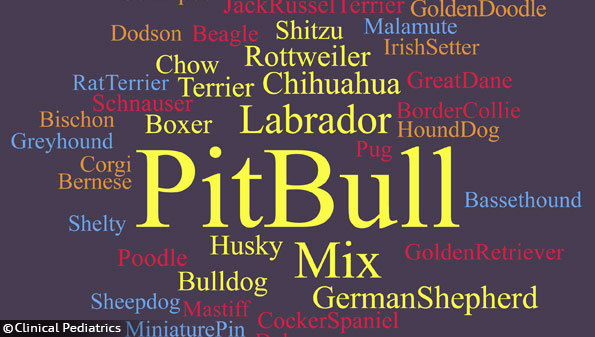
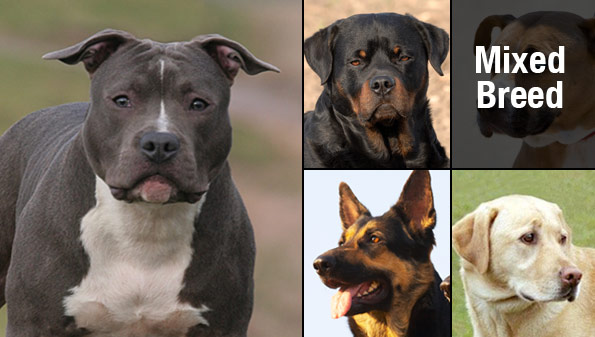
In the 15-year period of 2005 through 2019, canines killed 522 Americans. Pit bulls contributed to 66% (345) of these deaths. Combined, pit bulls and rottweilers contributed to 76% of the total recorded deaths. | More »
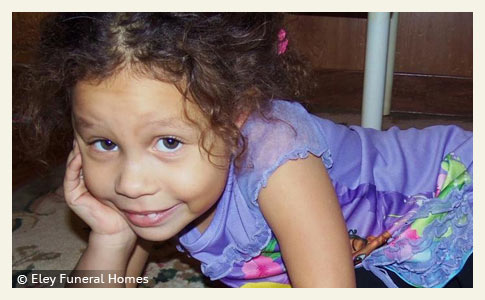
Newly acquired dog kills Kiyana McNeal, 4, injures mother in southwestern Michigan.
No Criminal Charges UPDATE 11/02/16: On October 23, 4-year old Kiyana McNeal was fatally attacked in the neck by a doberman-type dog either purchased or adopted by her mother just 45 minutes earlier from an Illinois man. He drove the dog to their home off West Fish Lake Road in Sherman Township then left under an hour later. Very few other details have been released. Today, the St. Joseph County prosecutor's office announced there was insufficient evidence to bring any criminal charges.
No information was provided about where the mother located the dog -- on Craigslist, Facebook or a rescue dog forum board? No information was provided about how the dog was advertised. Was the animal advertised as "Good with Kids?" No information was provided about the "mix" of the "doberman-mix," however, social media speculation presumes a canis panther, a doberman-type protection dog variant. The public will never know the answers to these important questions.
A Few Clarifications
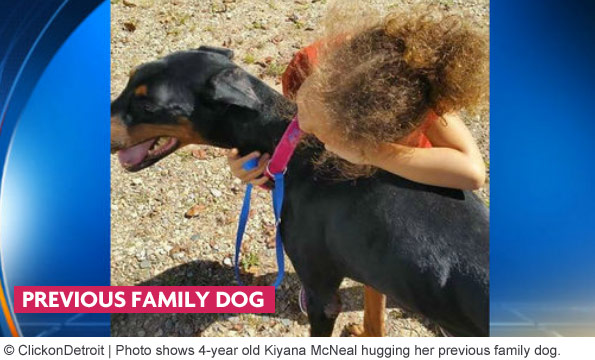
About 8-months ago, Kiyana's mother, Jacey McNeal Wolkins, adopted a doberman named Willow (seen in below photo). Willow died of cancer about 2-months before Kiyana's death, according to Lorie May, the little girl's stepmother. Her mother replaced it with the new doberman-mix, which May said was 3-years old. The Illinois man spent about 30 to 45 minutes with Kiyana and Jacey, while they got acquainted with the new dog, May said. Then he got in his car and left for Illinois.
It was alluded to in earlier reports that Jacey called the previous owner after the dog attacked Kiyana and he came rushing back to help. However, May later states that Jacey called the Illinois man about 5 minutes before the attack for unknown reasons and asked him to return. He arrived back at her home just after the attack and immediately began giving CPR to the little girl. Jacey sustained injuries trying to pry the dog off her daughter. She was hospitalized and released.
Doberman Dog Bite Fatalities
Fatal dog attacks involving doberman pinschers and their mixes account for 1% (5) of all dog bite fatalities in the U.S. since 2005 (388). One case involved a protection-trained doberman imported from Hungary that killed its 71-year old owner. Another case involved a family doberman that killed an infant, and a third case involved a pack attack with multiple large breeds, including dobermans. Over half of the 5 cases involved high-risk scenarios, elevated further by powerful dog breeds.
10/24/16: Additional Information
Neighbors of a 4-year old girl who was killed by a new dog said the child was giving the animal a biscuit when it fatally attacked her neck. Her family had acquired the doberman-type dog less than an hour earlier from its Illinois owner. "I was in my bedroom and I heard the screaming. And I heard somebody holler, ‘Becky!’" Neighbor Becky Davis recounted. "The dog come and sniffed it. Then stepped back and sniffed it again, and evidently the third time, he got her," Davis said.
"The mother and the guy that brought the dog, they had the baby on the ground doing CPR. It did not do any good." - Neighbor Becky Davis
The man from Illinois who sold or gave the dog to Kiyana's family said the dog was 4-years old and had never displayed aggression before. Becky Davis and her husband Kenneth were close to Kiyana and often babysat her. Kenneth even installed a gate between the two homes so Kiyana could visit while he worked in the yard. Kiyana's mother, Jacey McNeal Wolkins, was injured trying to save her daughter. Family members say the mother has since been released from the hospital.
The Davises also spoken to FOX 17. The couple clarified that the attack happened inside Kiyana's home -- earlier it was reported the attack occurred outside. "When they brought Kiyana out of the house, I saw her mother had lots and lots of blood,” Kenneth said. "Any blood, it was from Kiyana." One neighbor who rushed to help called 911. Jacey called the man who just sold her the dog who sped back to the home to help. First responders tried to revive the little girl. She died on scene.
10/24/16: Newly Acquired Dog Kills Child
Sherman Township, MI - On Sunday, a 4-year old girl was killed and her mother seriously injured by a dog they had recently acquired, St. Joseph County authorities said. The attack occurred about 4pm on the 63000 block of West Fish Lake Road, St. Joseph County Undersheriff Mark Lillywhite confirmed. The child could not be resuscitated and died on scene. The mother required hospitalization for her injuries. Authorities described the dog as a doberman or doberman-mix.
Circumstances of the attack remain unknown, but friends of the family told police the mother and daughter were outside with the dog when the attack occurred. The mother had acquired the dog to replace another family dog that had recently died, friends of the family said. No information was provided about the source of the dog -- whether it was acquired from a shelter, rescue, classified ad listing, family friend or breeder. St. Joseph County Animal Control took the dog into custody.
Donation Page Names Child
A YouCaring fundraiser for the child identifies the little girl as Kiyana McNeal. "They had gotten a dog that day and, as the old owner went to leave, the dog attacked Kiyana. Her mom tried to stop it and save her but couldn't," states the page. "She was taken by ambulance and hospitalized with wounds to her head and hands. It has been a whirlwind since then, and the pain is inexplicable. We have had numerous friends and family ask what they could do," states the donation page.
ClickOnDetroit shows a photo of the little girl with the family's previous doberman dog that died of cancer. The news video also states that Kiyana's mother purchased the new doberman-type dog from a man in Illinois. The original owner spent about 45 minutes at Kiyana's home and was about to leave, when the new doberman-type dog attacked the little girl. The mother intervened to save her daughter and was badly injured. Police have not released the name of the previous owner.
5-Part La Presse Investigation Translated to English
The Association of Veterinary Doctors of Quebec (OMVQ) omitted key parts of medical studies in their report to the ministerial committee. The omissions left some of the studies “unrecognizable.”
The OMVQ report also cited several studies, which they deemed to be “scientific,” but were funded by the heavily financed pro-pit bull lobby. The OMVQ failed to note this conflict of interest.
The 5-part La Presse investigation by Marie-Claude Malboeuf is now translated into English. After its release on August 13, Montreal officials solidified their commitment to pass a pit bull bylaw.
La Presse Investigation
On June 8, 2016 Montreal city officials, media members and the public were horrified after 55-year old Christiane Vadnais was savagely killed by a neighbor’s pit bull in her own backyard. The attack came just a few weeks after an investigation by La Presse showed that pit bulls were the leading offenders in serious dog attacks. After the mauling death of Vadnais, Montreal officials signaled they would move forward with a breed-specific bylaw, introducing the legislation in September.
In July, the Association of Veterinary Doctors of Quebec (OMVQ) sent a report to the ministerial committee tasked with advising government officials about the dangerous dog bylaw.1 In mid August, La Presse published another investigative series showing how the OMVQ report omitted key parts of peer-reviewed studies -- where doctors resolutely state that pit bulls were responsible for the most severe injuries -- leaving the studies distorted and even quasi-contradictory.
The 5-part La Presse investigation, now translated into English, also shows how the OMVQ report cited studies in their report, giving the impression of “scientific and objective,” but were funded by the well-financed American pro-pit bull lobby. The OMVQ report failed to mention this conflict of interest. The backlash after the La Presse investigation was substantial. Media members called the OMVQ report “flawed,” it “lacked scientific rigor” and the veterinarians’ “credibility damaged.”
“At best, the expertise of the order lacks scientific rigour and transparency. At worst, the veterinarians’ group is in a serious conflict of interest.” - Editorial Board, Montreal Gazette, August 15, 2016
Omissions in the OMVQ Report Reveal Deliberate Distortions to Obscure Transparency; Veterinarians are “Stakeholders”
The La Presse investigation details the extent in which the OMVQ report distorted vital parts of recent medical studies, specifically four, where the authors concluded unanimously that pit bulls were the most common culprits of high severity injuries. These four medical studies are also included in our recent table of retrospective level 1 trauma center studies (2009 to 2016), which shows that all U.S. geographical regions are now reporting a higher prevalence of pit bull injuries.2
In Part II (Which Side Does the Science Support?) and Part III (What the Government Wasn’t Told), La Presse spells out these omissions in the OMVQ report by using the technique, “What the OMVQ Communicated” versus “What they didn’t mention” and supplying the actual text. Reading these parts should outrage readers, especially the omissions in the 2011 study (Bini et al.). These deliberate omissions -- literally as was translated -- left some of these studies “unrecognizable.”
1. “Out of 101 cases, 57% of patients were under 10 years of age.”
2. “Of patients with head and neck bites, 32% were bitten by pit bulls, and breed was not indicated in 34% of cases.”
3. “The second most often implicated breed was the golden retriever.”3
What they didn’t mention
1. Pit bull victims were five times more likely to require surgery.
2. In contrast with other dogs, pit bulls were more likely to attack strangers (+31%) and without provocation (+48%)
3. The importance of pit bulls’ responsibility for bites was a key finding. It confirms and underlines the findings of other publications.
Veterinarians’ Cite Pit Bull Lobby
La Presse called out five unqualified studies cited in the OMVQ report that quickly led the veterinarians’ association to admit it had been a mistake to include them. Four of these studies, policy papers or “self-published books” were authored, co-authored, financed or all three by the American pit bull lobby, whose specialties focus on the impossibility to properly identify a pit bull, including by professional shelter workers, and that breed-specific legislation is ineffective.
The fifth questionable study cited in the OMVQ report is authored by Páraic Ó Súilleabháin -- an Irish psychology student -- (Human hospitalisations due to dog bites in Ireland, 1998-2013: Implications for current breed specific legislation). Ó Súilleabháin is an owner of a restricted breed and the founder of a lobby group, Unmuzzle Ireland, “a conflict of interest he was forced to declare after the fact, under questioning from a journalist from The Sunday Times,” La Presse learned.
Páraic Ó Súilleabháin, a doctoral candidate at the School of Psychology at NUI Galway, wrote the paper, which was published in The Veterinary Journal last week.
He also runs Unmuzzle Ireland, a campaign to have current breed-specific legislation reversed -- although this interest was not declared in his research. Last night he said he would update the paper to reflect his interest. - Siobhán Maguire, The Sunday Times, April 26, 2015
Ó Súilleabháin neglected to disclose his role in a lobby group that could influence his objectivity. At the same time he completed his research paper (July 2014), he submitted 11,000+ signatures4 on an online petition he sponsored, urging the Irish government to repeal its breed-specific law. What is stated on the paper is the following: “The author of this paper has no financial or personal relationship with other people or organisations that could influence the content of the paper.”5
Epidemiology Expert Reviews Studies
Given the galvanizing nature of the Montreal pit bull ban debate, La Presse contacted a professor emeritus at McGill University who agreed to look into the lobby’s studies. Dr. Barry Pless is one of the leading experts in Pediatric Trauma, Epidemiology and Biostatistics and is Director of the Injury Prevention Program at the Montreal Children’s Hospital. Dr. Pless also founded and remains an editor for the international medical journal Injury Prevention, affiliated with the prestigious BMJ.
“To conduct studies, which aim first of all to prevent laws from being adopted and not declare these conflicts of interest, is the strategy employed by the weapons lobby and the tobacco lobby.” - Dr. Barry Pless, MD, Professor Emeritus McGill University
Dr. Pless also commented on the cost of a pit bull bylaw. The OMVQ report states that shelters are concerned for “their structure and already precarious financial health” if the bylaw proceeds, La Presse reports. Dr. Pless countered with the cost of surgeries required to save the faces, hands -- and sometimes lives -- of bite victims. “This is without even considering indirect costs. How much is a lost eye or a torn face worth? Paying for prevention is nothing compared to what it saves.”
Veterinary College Makes Mea Culpa
On August 14, just one day after the La Presse series was released, Dr. Joel Bergeron, president of the College of Veterinary Surgeons of Quebec, specifically responded to the five unqualified studies cited in the OMVQ report in a follow up article published by La Presse.6 Bergeron’s response should send a strong message to other veterinarian groups who cite these same sources under the guise of “scientific and objective.” We translate the relevant portion below:
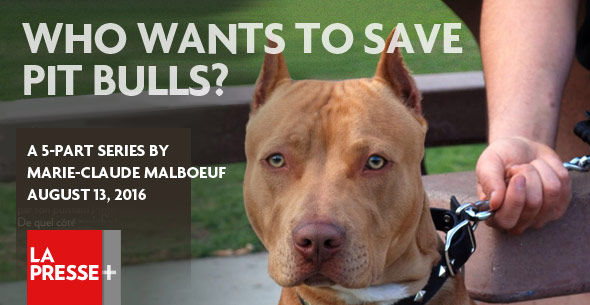
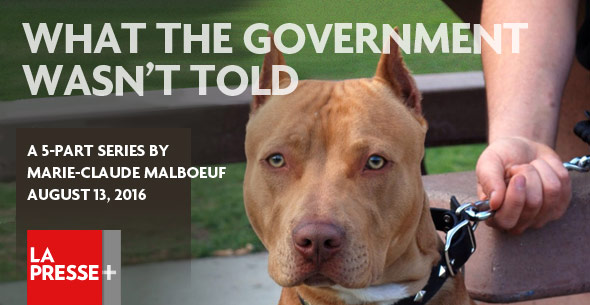
The day after the publication of La Presse’s pit bull report -- Who Wants To Save Pit Bulls? and What The Government Wasn’t Told -- Dr. Joel Bergeron, president of the College of Veterinary Surgeons of Quebec, admitted that the organization he represents had placed itself in a conflict of interest and plans to send a clarification letter directly to the committee.
“We listed five studies [on dangerous dogs] that might have called for qualification or even excluded from the report,” Dr. Bergeron said yesterday. - Audrey Ruel-Manseau, La Presse, August 15, 2016
The Five Unqualified Studies, Papers
American Pit Bull Lobby
Voith. VL, et.al., Comparison of Visual and DNA Breed Identification of Dogs and Inter-Observer Reliability, American Journal of Sociological Research, 2013, 3(2), pp. 17-29.
Patronek GJ, et.al., Co-occurrence of potentially preventable factors in 256 dog bite-related fatalities in the United States (2000-2009), JAVMA, Vol 243, No. 12, 2013.
Bradley, J., Dog Bites: Problems and Solutions; Policy Paper: A contemporary perspective on incidence, risk factors and effective prevention; Animal and Society Institute, 2014.
Delise, K. The Pitbull Placebo: The Media, Myths, and Politics of Canine Aggression. Ramsey, NJ: Anubis Publishing (Self Published), 2007.
Unmuzzle Ireland Founder
Suilleabhain PO, 2015. Human hospitalisations due to dog bites in Ireland (1998-2013): Implications for current breed specific legislation. The Veterinary Journal, Jun 2015 204(3):357-9. Epub April 2015.
Corporate Players in the American Pit Bull Lobby, How they Overlap, and How the Pit Bull Lobby Operates on 5 Levels
In Part IV (Like Dogs and Cats), La Presse spells out the players of the American Pit Bull Lobby. They divide it into 5 levels and explain the often overlapping relationships. DogsBite.org has known about this for six years -- exposing the first two levels in our 2010 domain name dispute -- but never until La Presse has the media examined it. Omitting conflicts of interest and financing research to confuse the public and legislators really “should” be an interest to U.S. media.
Five Levels of the Pit Bull Lobby
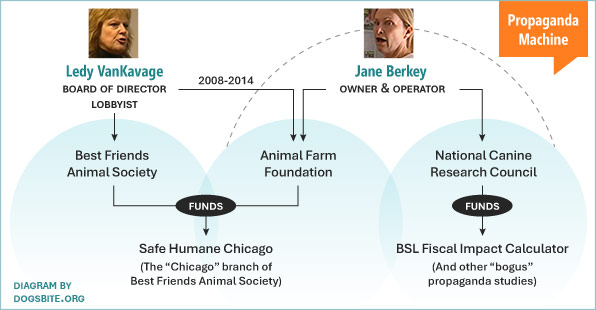
Level 1: The financing source. Animal Farm Foundation (AFF), owned by Jane Berkey. The company’s motto is: “Securing equal treatment and opportunity for pit bull dogs.” AFF devotes itself entirely to fighting pit bull regulations. “After inheriting a fortune from her father, Jane Berkey, who also owns a literary agency, turned over at least $6 million to her group, $2.85 million in 2013, according to government records. She pays 9 employees (one of whom, the director, makes more than $100,000 a year) and finances numerous groups that share her philosophy,” La Presse reports.
Level 2: The researchers. “To produce studies, AFF bought a private research body in 2007. The acquisition was kept secret until the victims’ group Dogsbite discovered this during litigation. The National Canine Research Council (NCRC) was created by a veterinary technician, Karen Delise. Neither an academic researcher nor a veterinarian, she self proclaims as the ‘greatest national expert on deaths caused by dog bites,’” La Presse reports. NCRC co-authors and finances studies, like the ones cited by the OMVQ, which chiefly attempt to show pit bulls cannot be identified.
Level 3: Publication. Journal of the American Veterinary Medical Association (JAVMA). “The American Veterinary Medical Association (AVMA) publishes NCRC studies in its journal. On its own website it proposes sample letters [for readers to write] contesting any law aimed at pit bulls. Moreover, its site has a link to AFF,” La Presse reports. The journalist even points out the AVMA’s notice on the embargoed 2000 fatal dog attack study, which falsely and fraudulently states: “In contrast to what has been reported in the news media, the data contained within this report CANNOT be used to infer any breed-specific risk for dog bite fatalities.”
Level 4: The political lobby. Best Friends Animal Society. Their senior legislative analyst, Ledy Vankavage, drafts state-level bills to eliminate local pit bull ordinances (state preemption laws) and is also a board member of AFF. Vankavage boasts on Best Friends’ corporate website that she commissioned an ex-economist from the tobacco industry, John Dunham, to create a fiscal calculator designed to advise governments on the cost of breed banning. Dunham’s sham BSL calculator, financed by the NCRC, over exaggerates these costs by nearly two orders of magnitude.
Level 5: The distributors. The animal care industry. “All the lobby studies are abundantly distributed by animal-based companies like shelters, breeders, trainers, etc. In Montreal, they are [distributed] by, amongst others, the SPCA, whose mission is to avoid euthanizing dogs and whose two most senior executives are themselves owners of pit bulls,” states La Presse. “On social media, pit bull owners deploy these studies relentlessly and accuse all their opponents of ignorance,” La Presse reports. More aggressive ones have even threatened the mayor of Quebec City with death.
Lobby Gets “Seal of Approval” by Vets
Legislators rely upon accurate information -- not deliberate omissions or citing studies financed by lobbying groups. The Association of Veterinary Doctors of Quebec failed in their duty and La Presse called them out for it. Veterinary associations in many countries have long been stakeholders in the “breed-specific” issue, but are often mistakenly perceived as “objective.” As in the case with the OMVQ report, Quebec and Montreal officials had trusted its accuracy.
The American veterinary association does the same thing -- also pointed out by La Presse. The primary objective of the AVMA is to obfuscate this issue, making it difficult to understand. The AVMA document, Role of Breed in Dog Bite Risk and Prevention, is a primary example of this obfuscation by mixing level 1 trauma center studies with “bite reports,” veterinary “referral” studies, surveys, claim documents and even a 1996 newsletter citation claiming Lhasa Apsos “bite more.”
What is a reader supposed to infer from this confusing document, of which 56% of all cited studies in the tables are from foreign countries and 58% are over 15-years old? Answer: This AVMA policy document is designed to obfuscate “bites” versus mauling injuries and to also obfuscate “breed identity” by citing studies funded by the pit bull lobby. Then they depart from scientific rigor by attributing the “owner’s behavior” as the “underlying causal factor” of a severe or fatal dog attack.
Given the degree of obfuscation by the AVMA in this alleged “scientific and objective” document, we reached out to animal behaviorist Alexandra Semyonova who provided a 9 page analysis:
Selling a lobbying pamphlet as science: Analysis of the May 15, 2014 AVMA pamphlet “Literature Review on the Welfare Implications of The Role of Breed in Dog Bite Risk and Prevention”
By Alexandra Semyonova
Introduction: The principle use of this document is to frustrate any community efforts to pass breed specific legislation. The American Veterinary Medical Association (AVMA) is trying to sell this political pamphlet as a scientific document. It’s therefore important for policy makers to be aware of the many scientific flaws this document contains.
Summary: This pamphlet is not a literature review. It contains not a single word about animal or human welfare. It misrepresents the research question: Breed-specific legislation (BSL) is not concerned with simple dog bites. BSL is always aimed at getting catastrophic maulings and fatal attacks by dogs under control. Since ordinary dog bites are not the issue, this pamphlet can be discarded as irrelevant to any discussion of BSL. As for content, this pamphlet contains no science. It is merely the repetition of a series of unfounded platitudes copied straight from the pit bull lobby’s widely distributed list of talking points. The many footnotes and long list of references does not add quality: The references are cherry-picked to exclude articles that are relevant to the issue of catastrophic and fatal maulings by dogs, all of which reveal that the pit bull type has always dominated this type of attack. More than half of the references date from the previous century, when pit bulls were extremely rare. Almost half of the referenced articles were written by people who are active in, employed by, or have other financial or career ties to pit bull advocacy. The tables included in the study are put together in a way that disguises rather than reveals any information the cited studies contained. Closer examination shows that both the references and the tables actually support the effectiveness of BSL in preventing catastrophic maulings and fatal attacks. Finally, the last two sections of this pamphlet contain several outright falsehoods, that are explained in this detailed analysis.
We encourage readers to review the La Presse investigation by Marie-Claude Malboeuf. We encourage media members, doctors, researchers and policy makers to as well. All parties are equally urged to recognize how “science and objectivity” are influenced and manipulated in the “breed-specific” research realm. Malboeuf’s investigation is outstanding and its implications could prove substantial for future Canadian and U.S. jurisdictions considering a breed-specific law.
Please also read the adjoining analysis by Semyonova about the American Veterinary Medical Association’s document, Role of Breed in Dog Bite Risk and Prevention, that is consistently used across the United States -- as well as abroad, it too is cited in the OMVQ report -- to stop communities from enacting life-saving breed-specific legislation. Veterinary associations are stakeholders in the “breed-specific” issue and cannot be viewed as “objective” or disinterested.
Montreal’s Pit Bull Ban Today
On October 3, the Montreal pit bull ban went into effect. A lower court judge quickly suspended the pit bull provisions, despite longstanding appellate court decisions upholding the Ontario pit bull ban. Montreal officials were not intimidated; they appealed the suspension. Last week, the Court of Appeal of Quebec heard oral arguments from the City of Montreal and attorneys from the Montreal SCPA, who brought the legal challenge. The high court will rule in the coming days.
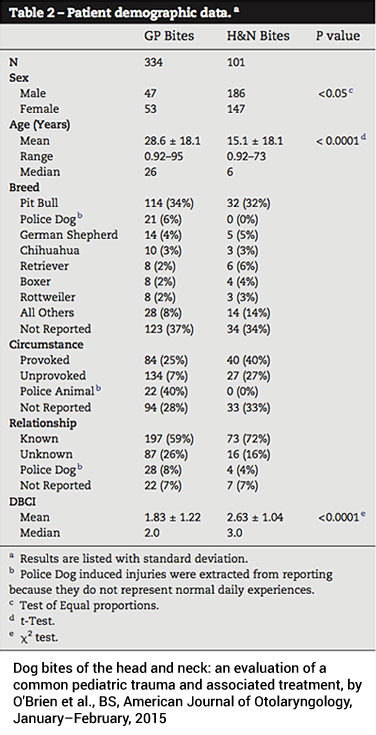
1Rapport de l’Ordre des médecins vétérinaires du Québec: Premier rapport de l’OMVQ au comité ministériel sur l’encadrement des chiens dangereux, 8 juillet 2016 (Page 37 shows citation list). 2See: Bini et al. 2011, O’Brien et al. 2015, Garvey et al. 2015, and Prendes et al. 2015. 3The O'Brien study (Dog bites of the head and neck: an evaluation of a common pediatric trauma and associated treatment) never once mentions “golden retriever.” The OMVQ report completely misrepresents this. What the study did state, pertaining to head and neck injuries only, is the following: “In patients with dog bites to the head and neck, pit bull terriers composed the largest portion of the plurality (32%), with the next most common breed being retrievers (6%).” (See related chart) Certainly “retrievers” could include labradors and goldens, but never is the word “golden” stated in the study. Nonetheless, the OMVQ report states “golden retrievers” and mentions nothing about labradors: “Pour les patients avec morsures à la tête et au cou, 32 % étaient des morsures de Pitbull et la race n’était pas indiquée dans 34 % des cas. La deuxième race impliquée dans 6 % des cas était le Golden Retriever.”4We discovered in March 2017 -- while doing routine maintenance for broken links -- that Páraic Ó Súilleabháin deleted the original Tweet, so we replaced it with a screenshot. 5Additional comments on the Unmuzzle Ireland founder’s research paper.
Ó Súilleabháin fails to state what the actual breed-specific measures are, which in the case of Ireland is critical. The regulations only require owners of 11 breeds -- when in a public space -- to use a shorter leash and a muzzle. Literature for well over two decades agrees that about 70% of all dog bites occur in the dog owner’s home or yard, an area entirely outside of the Ireland law. The majority of the remaining 30% percent, at least in the U.S., are attacks inflicted by loose dogs when the owner is not present. Only a fraction of these attacks occur when a dog owner is present, takes his dog into a public space, leashed or unleashed, and the dog inflicts a serious bite injury. The Ireland law is intended to stop this type of attack.
Despite the overwhelming shortfalls of the flawed paper, Ó Súilleabháin still makes the sweeping claim that Ireland’s modest breed-specific law is ineffective. In fact, he makes the unsubstantiated claim the Irish legislation is actually contributing to a rise in hospitalizations! In his paper, Ó Súilleabháin is quick to cite pit bull lobby studies published in industry trade journals (lower quality) as “scientific fact,” but fails to cite studies from neutral journals (higher quality). Namely the 2010 Catalonia study published in Injury Prevention, that found a 38% decline in hospitalizations over a 12-year period (1997 to 2008) after the government enacted dangerous dog regulations, including breed-specific measures.
Ó Súilleabháin also failed to research, state or otherwise, the rising rate of hospitalizations for dog bite injuries in modern countries around the world not governed by breed-specific regulations during a similar period of years. A United States study published in 2010 showed that the rate of hospitalizations for dog bite injuries from 1993 to 2008 in the U.S. increased by 55%, from 2.0 to 3.1 per 100,000 population. That is more than double the incidence rate increase (of 21%) experienced in Ireland from 1998 to 2013.
Summary of Key Peer-Reviewed Medical Studies (2009-2016)
When all major U.S. geographical regions are reporting similar findings, as they are now, this sends a much stronger message to public health officials and legislators.
Level 1 Trauma Studies Table
There are at least 10 peer-reviewed dog bite studies published in medical science journals since 2009 that show a higher frequency of pit bull injuries than all other breeds of dogs in retrospective reviews of level I trauma centers. As of 2016, all major geographical regions in the U.S. are reporting these same findings as well: northwest, west, southwest, south, southeast, midwest and northeast. Since 2011 these medical studies have more closely scrutinized pit bull injuries as well.
"Pit bull bites were implicated in half of all surgeries performed and over 2.5 times as likely to bite in multiple anatomic locations as compared to other breeds." - Characteristics of 1616 Consecutive Dog Bite Injuries, July 2016
We selected 11 studies for inclusion in the table because each examines hospital records from level 1 trauma centers, where patients with a higher severity of injury are often treated, incorporate multiple years of data into their study and were conducted by medical doctors, not veterinarians. This post concentrates on studies published from 2011 to 2016, many of which show an urgency to address pit bull injuries due to their higher severity and higher rate of surgical intervention.
We believe three primary factors led to the last 5-years of research in these retrospective level 1 trauma dog bite injury studies. The first is an increased awareness by doctors of the prevalence of severe pit bull maulings (especially regarding children) coming into their trauma center. Secondly, the two major studies that helped lay the groundwork for this research. Thirdly, the desire by trauma doctors to see if the studies' findings were also true in other U.S. geographical regions.
In 2009, a 5-year retrospective review of 551 pediatric dog bite victims at the Children’s Hospital of Philadelphia was published in Plastic and Reconstructive Surgery. When breed was known (269 cases), pit bulls were responsible for 51%.1 In 2011, a 15-year retrospective review of 228 dog bite victims at University Hospital, a level 1 trauma center in south Texas, was published in the Annals of Surgery. This study went further, examining pit bull injuries versus injuries by all other breeds.
The study's results showed that compared with attacks by other breeds of dogs, attacks by pit bulls were associated with a higher median injury severity score, a higher risk of an admission Glasgow Coma Scale score of 8 or lower, higher median hospital charges and a higher risk of death. Now doctors researching dog bite injuries at level 1 trauma centers in other geographical areas are reporting similar findings. These are a body of studies, each building upon another.
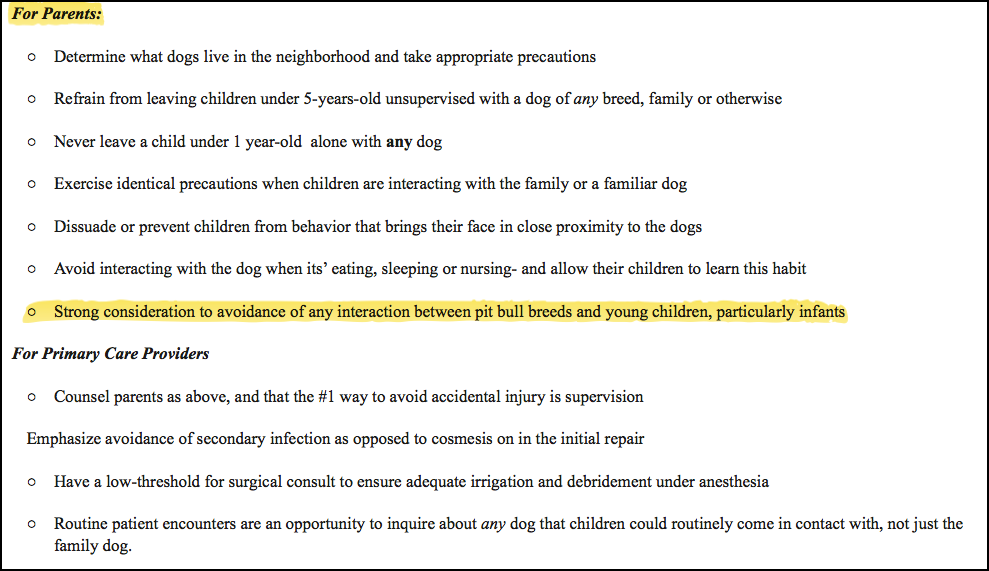
We examine five of these studies to show how this research development evolves. No longer are there just a few studies highlighting pit bull injuries -- there is a collection of them. In the most recent study, authors even issued a warning to parents: "Strong consideration to avoidance of any interaction between pit bull breeds and young children, particularly infants." Other recent study authors hope their data helps shape public policy to increase the safety and welfare of children.
Characteristics of 1616 Consecutive Dog Bite Injuries at a Single Institution
Published July 2016
Southeast (Atlanta, Georgia)
Pediatric Level 1 Trauma Center Download full study | open access
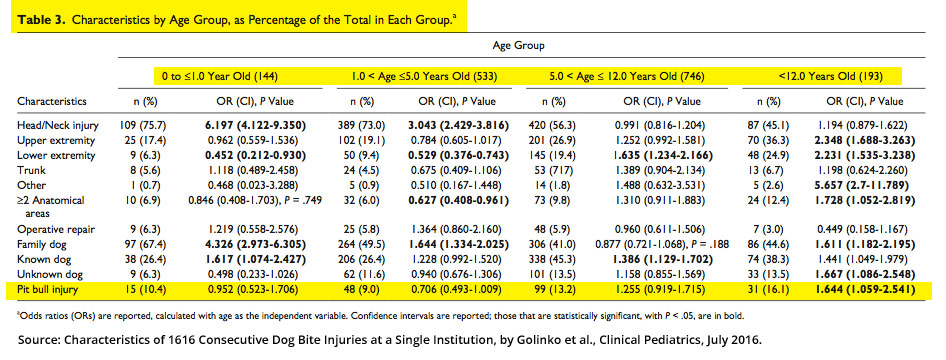
Characteristics of 1616 Consecutive Dog Bite Injuries at a Single Institution, is a 4-year review of Children’s Healthcare of Atlanta, a pediatric level I trauma center in Georgia. It is one of the largest retrospective studies and examines 1616 dog bite victims. The study refers back to eight different studies and their findings are consistent with six of them regarding pit bull injuries compared to other breeds of dogs: a higher frequency of injury and a higher degree of severity of injury.
Our data confirm what detractors of the breed and child advocates suggest -- that, with rare exceptions, children and pit bulls do not mix well. Of the 8 studies listed in Table 5, 6 report pit bulls as the most prevalent breed, and in many cases, they inflicted the most severe injuries. A large study at Children’s Hospital of Pennsylvania showed that over a 12-year period, 25% of injuries were caused by a pit bull, and two-thirds of those required an operation. Our data were consistent with others, in that an operative intervention was more than 3 times as likely to be associated with a pit bull injury than with any other breed. Half of the operations performed on children in this study as well as the only mortality resulted from a pit bull injury. Our data revealed that pit bull breeds were more than 2.5 times as likely as other breeds to bite in multiple anatomical locations. Although other breeds may bite with the same or higher frequency, the injury that a pit bull inflicts per bite is often more severe. Consistent with these findings is that of Bini et al, who reported on 228 patients and found that attacks by pit bulls resulted in a higher injury severity score, lower Glasgow coma score, higher risk of death, and higher hospital charges than attacks by any other breed.
This study also emphasizes an increased risk of infants being injured by dogs. "Infants were more than 4 times as likely to be bitten by the family dog and more than 6 times as likely to be bitten in the head/neck region," the study states. Table 3 examines injuries by age group. The 0 to 1-year old age group shows that 67% (97) were bitten by family dogs. Pit bulls inflicted 15 of these bites. The 5 to 12-year old group had the highest number of bites, 746. Pit bulls inflicted 13% (99).
Ocular Trauma From Dog Bites: Characterization, Associations, and Treatment Patterns at a Regional Level I Trauma Center Over 11 Years
Published June 2015
Northwest (Seattle, Washington)
Regional Level 1 Trauma Center Request full-text
Ocular Trauma From Dog Bites: Characterization, Associations, and Treatment Patterns at a Regional Level I Trauma Center Over 11 Years, is a review of 342 dog bite victims treated at Harborview Medical Center, a regional level 1 trauma center in Seattle serving 5 states. The study reports that pit bulls were responsible for more than 1 in 4 (27%) of all injuries and 25% of ocular injuries. When attacked by unknown dogs, pit bulls were responsible for 60% of these injuries.
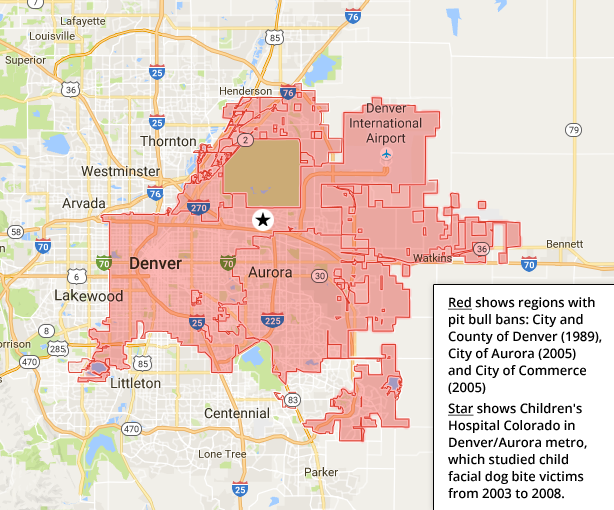
Importantly, this study is the first to accurately establish that pit bulls are the breed most commonly associated with ocular injuries (25%). Most alarming is the observation that when attacks come from unfamiliar dogs, the pit bull was responsible for 60% and 63% of all injuries and ocular injuries, respectively. In attempts to thwart the ownership of aggressive dog breeds and to reduce injuries from attacks, breed restrictions have been enacted in the United States and elsewhere. These measures are controversial as many remain skeptical as to the aggressive nature of this breed and insist that this breed is safe around children. It is interesting to note that the largest pediatric facial dog bite series did not find the pit bull to be the most common breed responsible, however it was performed in a county where pit bulls are banned [Aurora, CO].2The current study provides strong evidence that pit bulls are indeed highly aggressive, albeit unknown whether by nature or nurture, and are in fact the most common culprits of serious pediatric ocular injuries. The authors hope these data can help guide awareness and help shape public policy to increase the safety and well being of children.
Morbidity of Pediatric Dog Bites: A case series at a level one pediatric trauma center
Published February 2015
Southwest (Phoenix, Arizona)
Pediatric Level 1 Trauma Center Read abstract or purchase
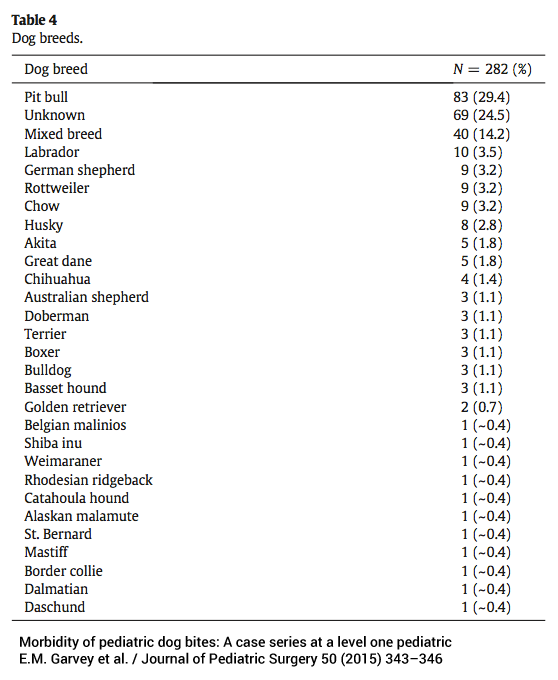
Morbidity of Pediatric Dog Bites: A case series at a level one pediatric trauma center, is a review of 282 dog bite victims treated at Phoenix Children's Hospital, a pediatric level 1 trauma center. Pit bulls were most frequently responsible, accounting for 39% (83/213) of all injuries when dog breed was documented and 38% of all head, neck or facial bite injuries. This study examined patients brought in by ambulance and/or seen by the trauma team -- higher injury severity victims.
Results: Of 650 dog bite incidents, 282 met the criteria for inclusion in the trauma database. Median age was 5 years (range, 2 months to 17 years) and 55% (154/282) of patients were male. Pit bulls were most frequently responsible, accounting for 39% (83/213) of incidents in which dog breed was documented. Fifty-three percent (150/282) of dogs belonged to the patient's immediate or extended family. Sixty-nine percent (194/282) of patients required operative intervention: 76% laceration repairs, 14% tissue transfers, and 2% neurosurgical interventions. The most severe injuries were depressed skull fractures, intracranial hemorrhage, laryngotracheal transection, and bilateral orchiectomy. Median length of stay was 1 day (range, 0 to 25 days). There were no mortalities.
Among the 11 patients with the highest AIS (3–5), Pit bulls were responsible in 45.5% (5/11) of cases, followed by mixed breeds in 18.2% (2/11) of cases. Pit bulls were also responsible for 38% (11/29) of all head, neck or face bites.
Conclusions: Pediatric dog bites span a wide range of ages, frequently require operative intervention, and can cause severe morbidity. Dog familiarity did not confer safety, and in this series, Pit bulls were most frequently responsible. These findings have great relevance for child safety.
"This report is the first addressing the characteristics of all types of pediatric dog bites in the southwestern US," states the study. "Prior retrospective studies from the northeast and midwest have shown a predilection for male victims in the five to 12 year age range, with injuries frequently occurring during summer months by dogs that are familiar to the child (most commonly Pit bulls)." The authors also note that pit bulls only accounted for 6.25% of the licensed dogs in the county.
"In 2008, there were 122,017 licensed dogs in Maricopa County, the most populous county in Arizona. Pit bulls accounted for 6.25% of the licensed dog population, only the seventh most popular breed. Labrador retrievers were the most popular breed accounting for 25.7%," states the study. Yet in this retrospective study of a pediatric trauma center that serves this county, pit bulls were responsible for 29% (83) of all bites (282) and labradors just 3.5% (10). View related chart.
Dog Bites of the Head and Neck: An Evaluation of a Common Pediatric Trauma and Associated Treatment
Published January-February 2015
West (Sacramento, California)
Level 1 trauma center Download full study | open access
Dog Bites of the Head and Neck: An Evaluation of a Common Pediatric Trauma and Associated Treatment, is a review of 334 dog bite victims treated at the University of California Davis Medical Center, a level I trauma center in Sacramento. The retrospective study shows a higher frequency of pit bull injuries, a higher degree of severity of injuries and a greater number of surgical interventions required -- 5 times the relative rate -- than attacks by other breeds of dogs.
Results: 334 unique dog bites were identified, of which 101 involved the head and neck. The mean patient age was 15.1 ± 18.1 years. Of the more than 8 different breeds identified, one-third were caused by pit bull terriers and resulted in the highest rate of consultation (94%) and had 5 times the relative rate of surgical intervention. Unlike all other breeds, pit bull terriers were relatively more likely to attack an unknown individual (+31%), and without provocation (+48%). Injuries of the head and neck had an average follow-up of 1.26 ± 2.4 visits, and average specialty follow-up of 3.1 ± 3.5 visits.
Conclusions: The patients most likely to suffer dog bite injuries of the head and neck are children. Although a number of dog breeds were identified, the largest group were pit bull terriers, whose resultant injuries were more severe and resulted from unprovoked, unknown dogs. More severe injuries required a greater number of interventions, a greater number of inpatient physicians, and more outpatient follow-up encounters.
The study also states, "The key finding from our second objective, determining the dogs responsible for bites, is the importance of pit bull terriers in patients with dog bites of the head and neck. The findings of this study are consistent with and extend from previous publications [5,7,11–13,16,21,22,29]. Dog bites from pit bull terriers, compared to bites from all other dogs are more common, more severe, and not related to the dog being provoked." View related chart.
Mortality, Mauling, and Maiming by Vicious Dogs
Published April 2011
South (San Antonio, Texas)
Level 1 trauma center Request full-text
Mortality, Mauling, and Maiming by Vicious Dogs, is a 15-year review of all dog bite victims admitted to the regional level I trauma center at University Hospital San Antonio from 1994 to 2009 and treated by the Trauma and Emergency Surgery Service. As noted earlier, this study helped lay the groundwork for future studies by showing that attacks by pit bulls were associated with higher injury severity, higher hospital charges and a higher risk of death than other breeds of dogs.
Results: Our Trauma and Emergency Surgery Services treated 228 patients with dog bite injuries; for 82 of those patients, the breed of dog involved was recorded (29 were injured by pit bulls). Compared with attacks by other breeds of dogs, attacks by pit bulls were associated with a higher median Injury Severity Scale score (4 vs. 1; P = 0.002), a higher risk of an admission Glasgow Coma Scale score of 8 or lower (17.2% vs. 0%; P = 0.006), higher median hospital charges ($10,500 vs. $7200; P = 0.003), and a higher risk of death (10.3% vs. 0%; P = 0.041).
Conclusions:Attacks by pit bulls are associated with higher morbidity rates, higher hospital charges, and a higher risk of death than are attacks by other breeds of dogs. Strict regulation of pit bulls may substantially reduce the US mortality rates related to dog bites.
Summary
Retrospective dog bite studies from level 1 trauma centers from all major geographical regions in the U.S. are reporting a higher prevalence of pit bull injuries than all other breeds of dogs. In many cases, the studies also report that pit bull injuries have a higher severity of injury and require a greater number of operative interventions. Only one study in 11 reported different results, a level 1 pediatric trauma center in the Denver-Aurora region, where pit bulls have long been banned.
Despite the difficulty of gaining breed information for more patients in these studies, doctors continue to pursue this data. Some do so by accessing data at the city or county animal control department. In the case of Harborview Medical Center, researchers were able to obtain breed information in 79% of the cases from chart documentation. This indicates that Harborview has already been collecting breed data from dog bite patients and other records for some time.
Finally, authors in the most recent studies voice their alarm about the gravity of pit bull injuries, particularly concerning children, and the urgent need to raise more awareness among parents. Some authors hope their data helps shape public policies, which may involve breed restrictions. At the very least, accurate information must be provided to parents. The flyer we released in April 2012 carries this very same theme: Is it worth the risk? Children and pit bulls do not mix.
When all major U.S. geographical regions are reporting similar findings, as they are now, this sends a much stronger message to public health officials and legislators.
1The 2009 Philadelphia Children's Hospital study was not the first in the northeast to see a higher prevalence of pit bull injuries in retrospective studies (Pediatric Dog Bite Injuries: A 5-Year Review of the Experience at The Children's Hospital of Philadelphia, by Kaye et al., Plastic and Reconstructive Surgery, August 2009). Two other Pennsylvania level 1 pediatric trauma centers reported this trend developing in studies published in 1999 and 2000. (Dog bite injuries in children: a preliminary survey, by Gandhi et al., The American Surgeon, October 1999) and (Dog bites in children treated in a pediatric emergency department, by Bernardo et al., Journal for Specialists in Pediatric Nursing, April-June 2000). 2The authors of the Denver-Aurora pediatric hospital study also make an important statement about pit bulls and the multiple pit bull bans in the area: "Our study found 11 victims of pit bull bites from 2003 to 2008, including the patient who suffered the most extensive injuries and the longest hospitalization of our entire population, indicating that despite legislation, pit bull bites continue to be a public health concern."
Retrospective studies from level 1 trauma centers from all major geographical regions in the U.S. are reporting a higher frequency of pit bull injuries than all other breeds of dogs. In many cases, the studies also report that pit bull injuries have a higher severity of injury and require a greater number of operative interventions. Only one study in 11 reported different results, a level 1 pediatric trauma center in the Denver-Aurora region, where pit bulls have long been banned.
Inclusion requirements for this table: A peer-reviewed, multi-year retrospective level 1 trauma center examination of hospital records for patients injured by dogs. The study must be authored by doctors, human injury medical experts, and published in a scientific medical journal. Below are 11 studies published from 2009 to July 2016 that meet those requirements. Hospital records do not always contain breed data, however, some trauma centers are capturing up to 79% of this data.
228 studied. Breed identified in 82 cases, 36%. Pit bulls associated with higher morbidity rates, higher hospital charges, and a higher risk of death. Three fatalities.
Pit bulls (29) 35% when breed known. Pit bulls inflicted all three fatalities.
537 studied. Facial injuries only. 58 breeds identified in 366 cases, 68.2%. "Our study found 11 victims of pit bull bites from 2003 to 2008, including the patient who suffered the most extensive injuries and the longest hospitalization of our entire population, indicating that despite legislation, pit bull bites continue to be a public health concern."
Mixed breed (84) 23% when breed known and 16% of total studied.
334 studied. Breed identified in 211 cases, 63%. Pit bull injuries had the highest rate of consultation (94%) and 5 times the relative rate of surgical intervention when compared to other breeds.
Pit bull (114) 54% when breed known and 34% of total studied.
Southwest - Level 1 trauma center (pediatric) - Phoenix, AZ
282 studied. Breed identified in 213 cases, 75.5%. Pit bulls accounted for 38% of all head, neck or facial bites. Of the 11 patients with the highest AIS (3–5),1 pit bulls were responsible in 45.5% of cases.
Pit bull (83) 39% when breed known and 29% of total studied.
Northwest - Regional level 1 trauma center - Seattle, WA
342 studied. Breeds identified in 270 cases, 79%. Among dogs unknown to patients, pit bulls were responsible for 60% of all injuries and 63% of ocular injuries.
Pit bull (92) 27% of total studied and (22.7) 25% of all ocular injuries.
Southeast - Level 1 trauma center (pediatric) - Atlanta, GA
1616 studied. 46 breeds identified in 506 cases, 31.3%. Pit bulls responsible for 50% of injuries requiring surgery and over 2.5 times as likely to bite in multiple anatomic locations than other breeds. Operative intervention more than 3 times as likely to be associated with pit bull injury than any other breed. One fatality.
Pit bull (195) 38.5% when breed was known and 12% of total studied. Pit bull inflicted fatality.